

TLDR:
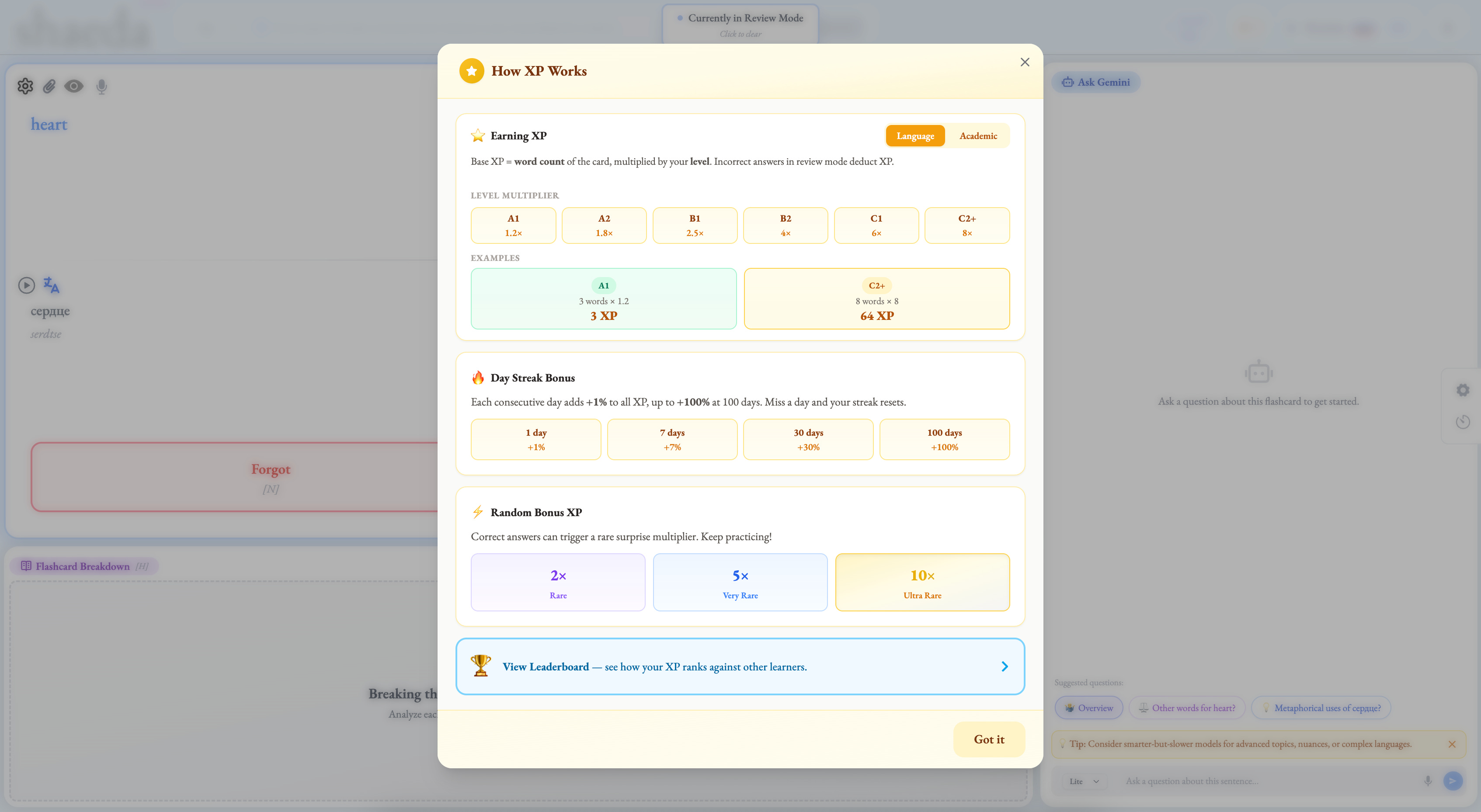
XP + Leaderboard
DIY cards improved (with a very helpful and unique feature for Language learners)
Import Anki
Import Duolingo
Import Source Material
Card Database
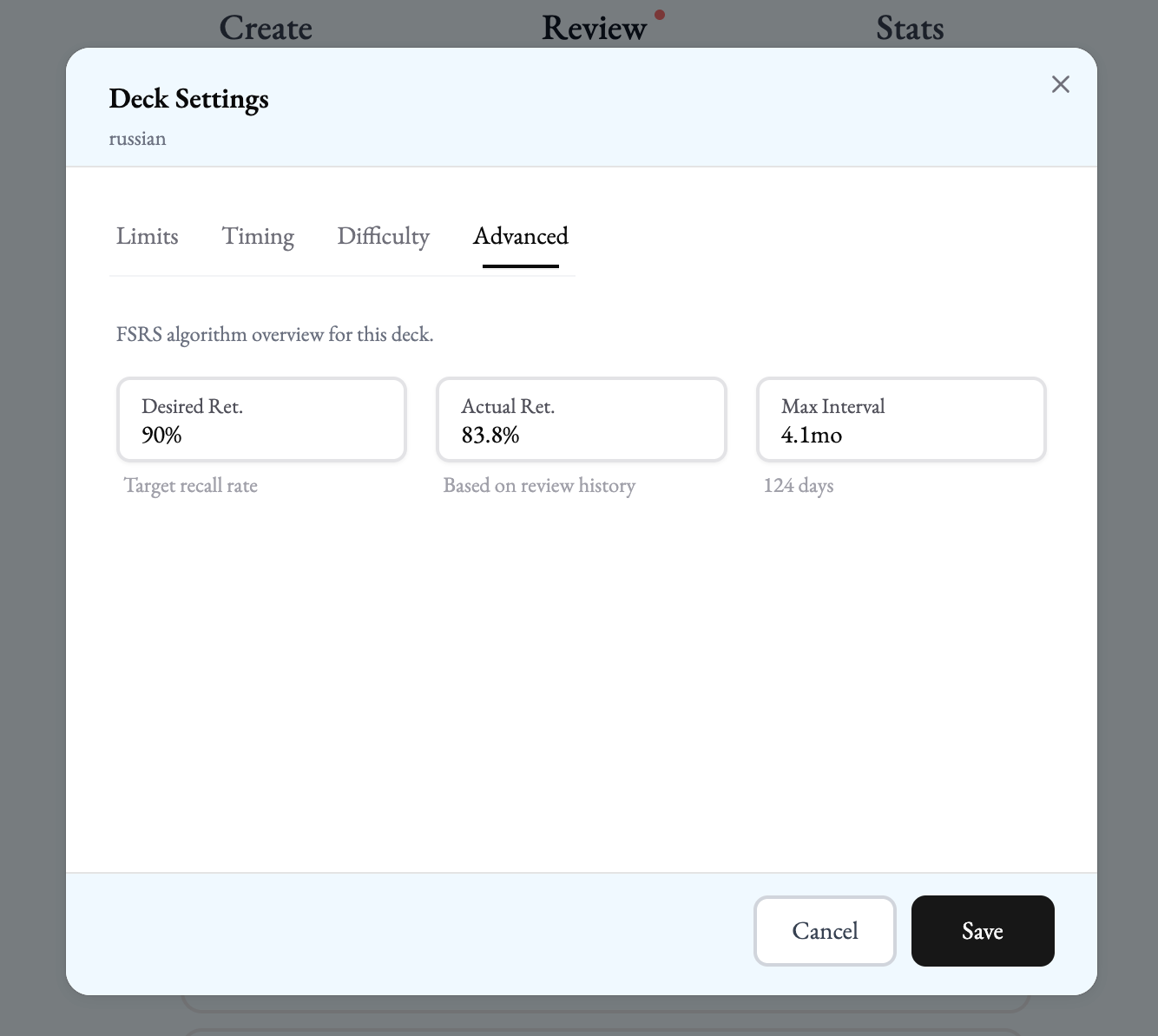
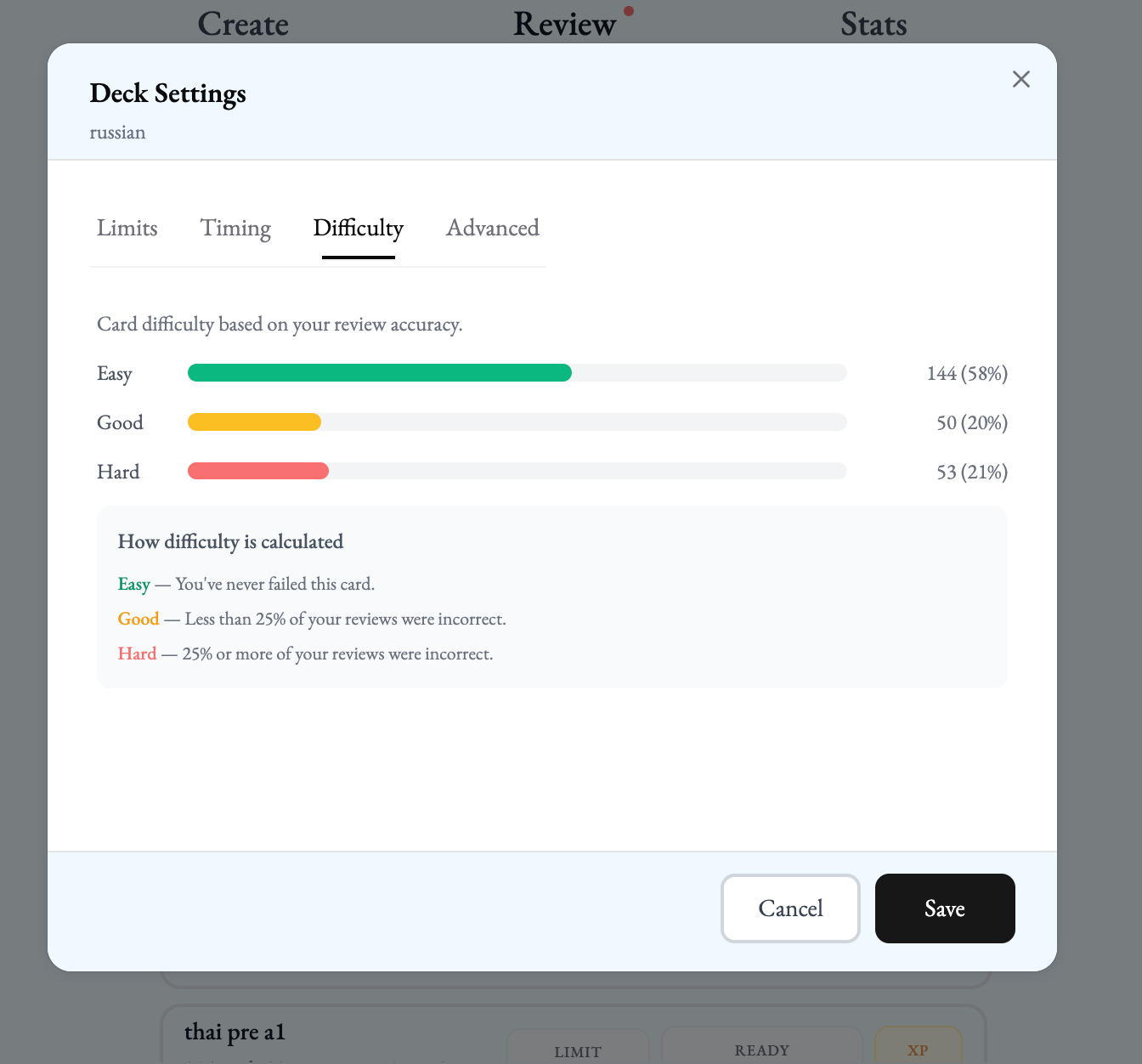
Deck Statistics
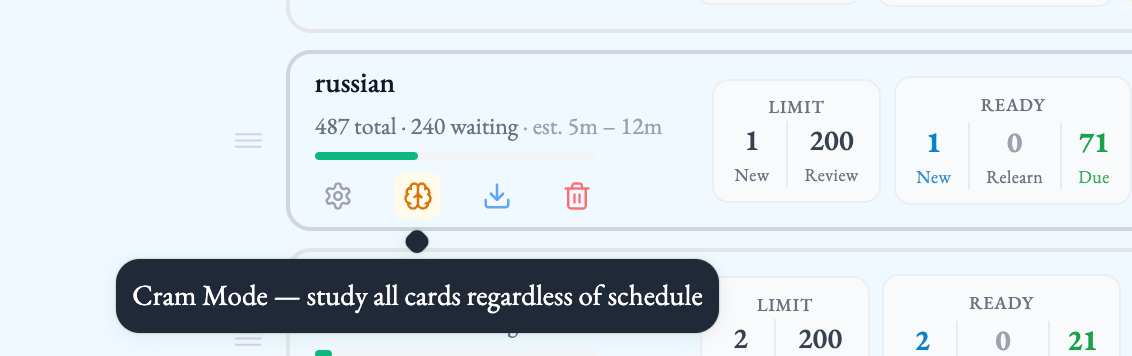
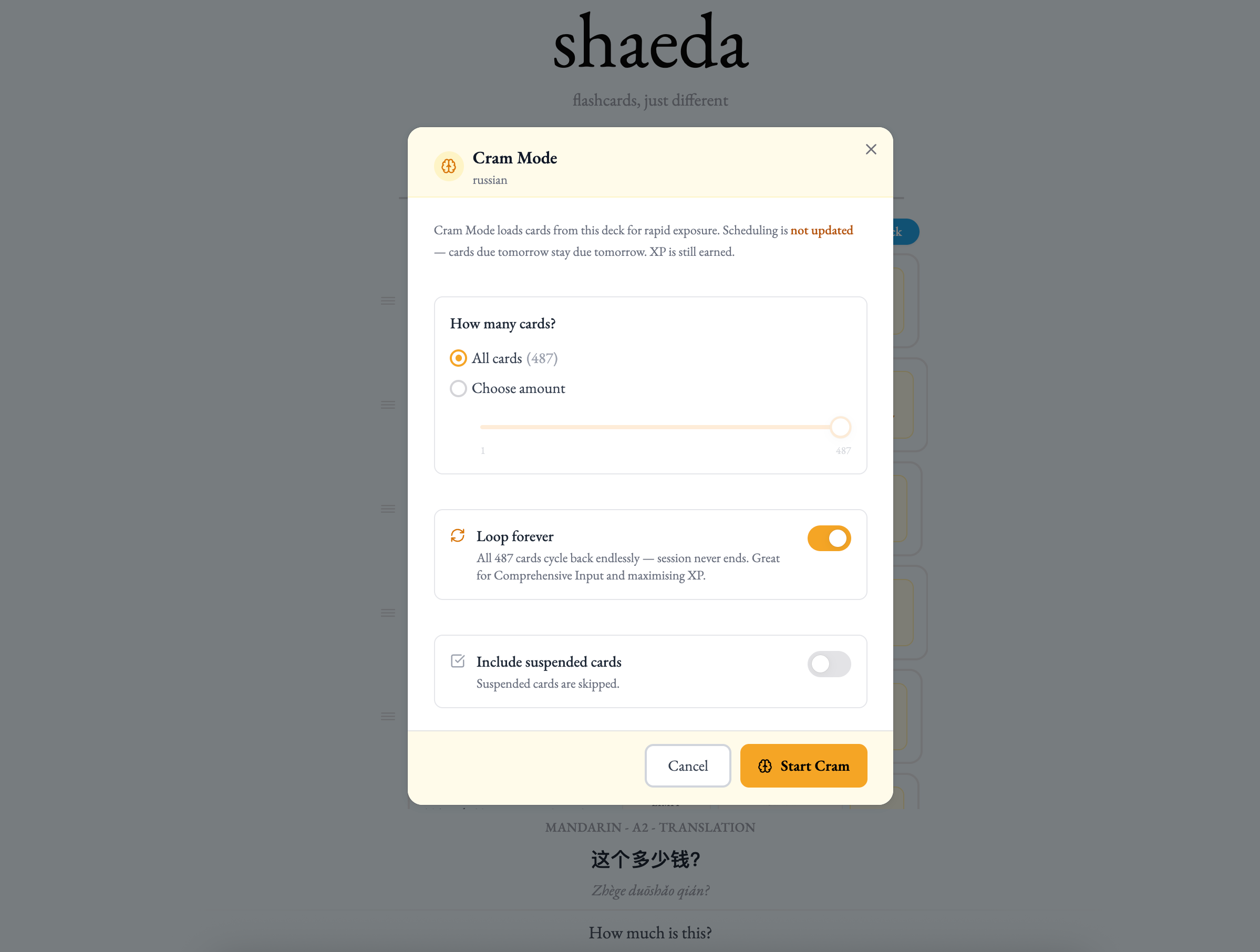
Cram Mode (useful for exam prep and/or comprehensible input etc)
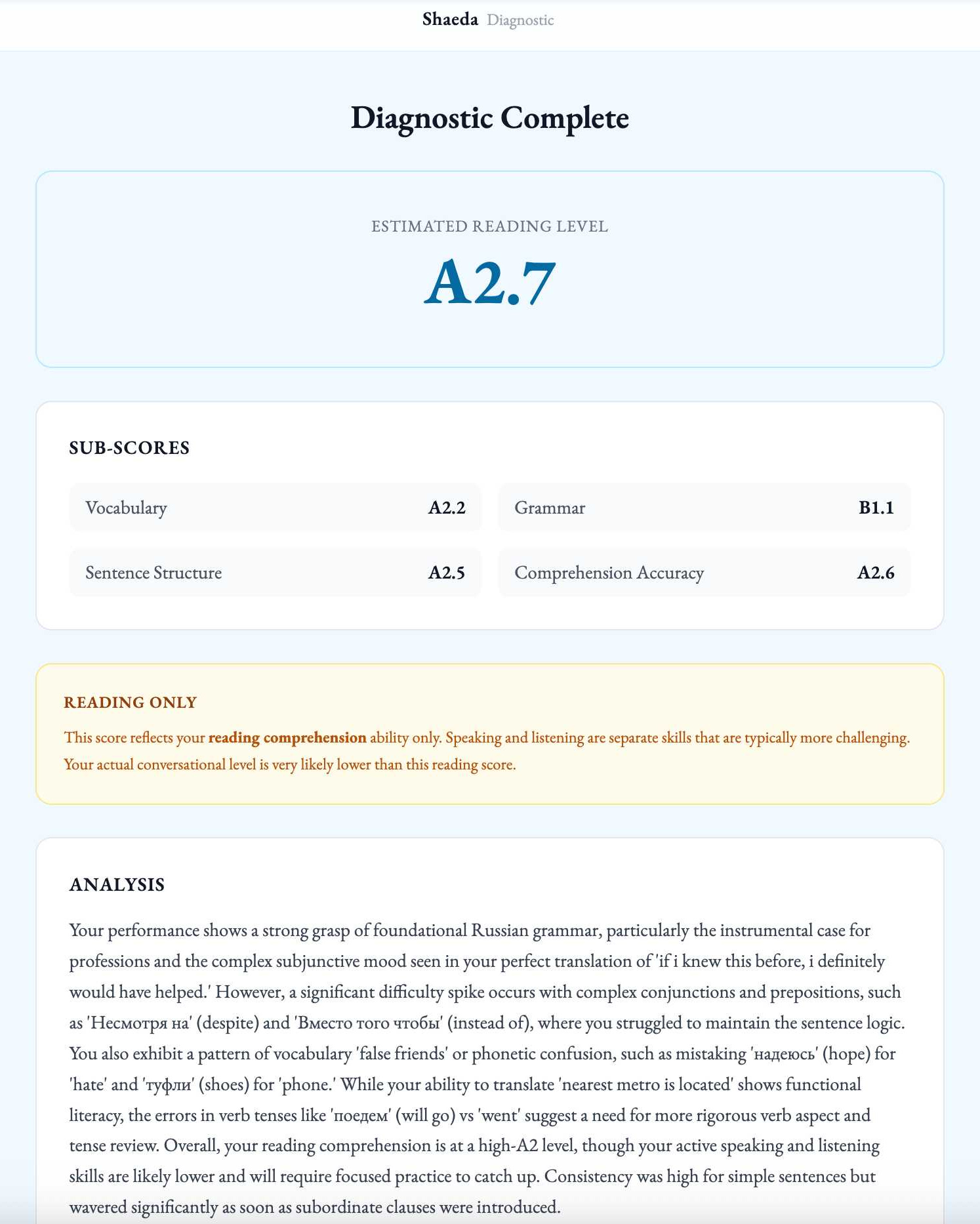
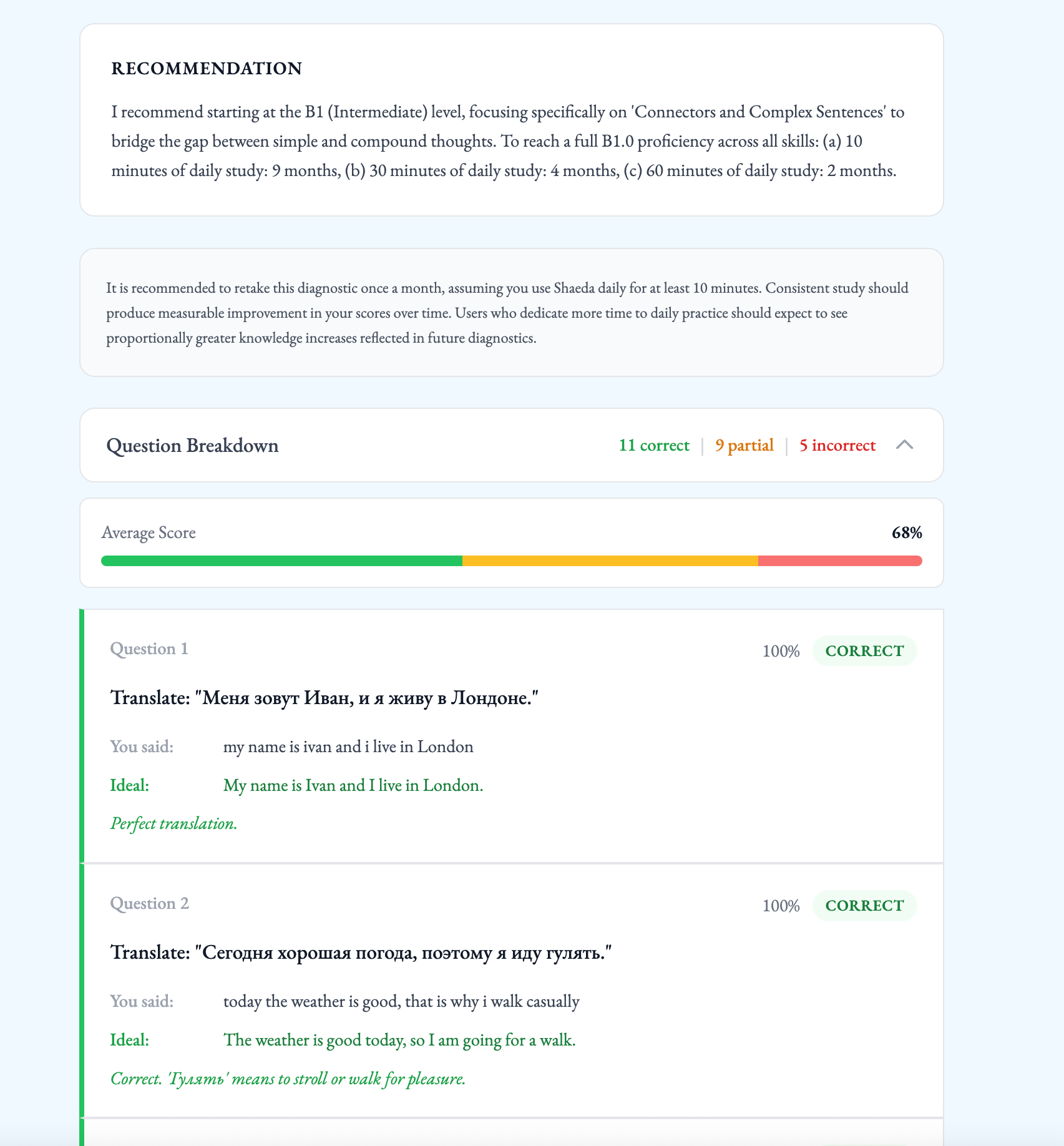
Diagnostic
Shaeda vs Others
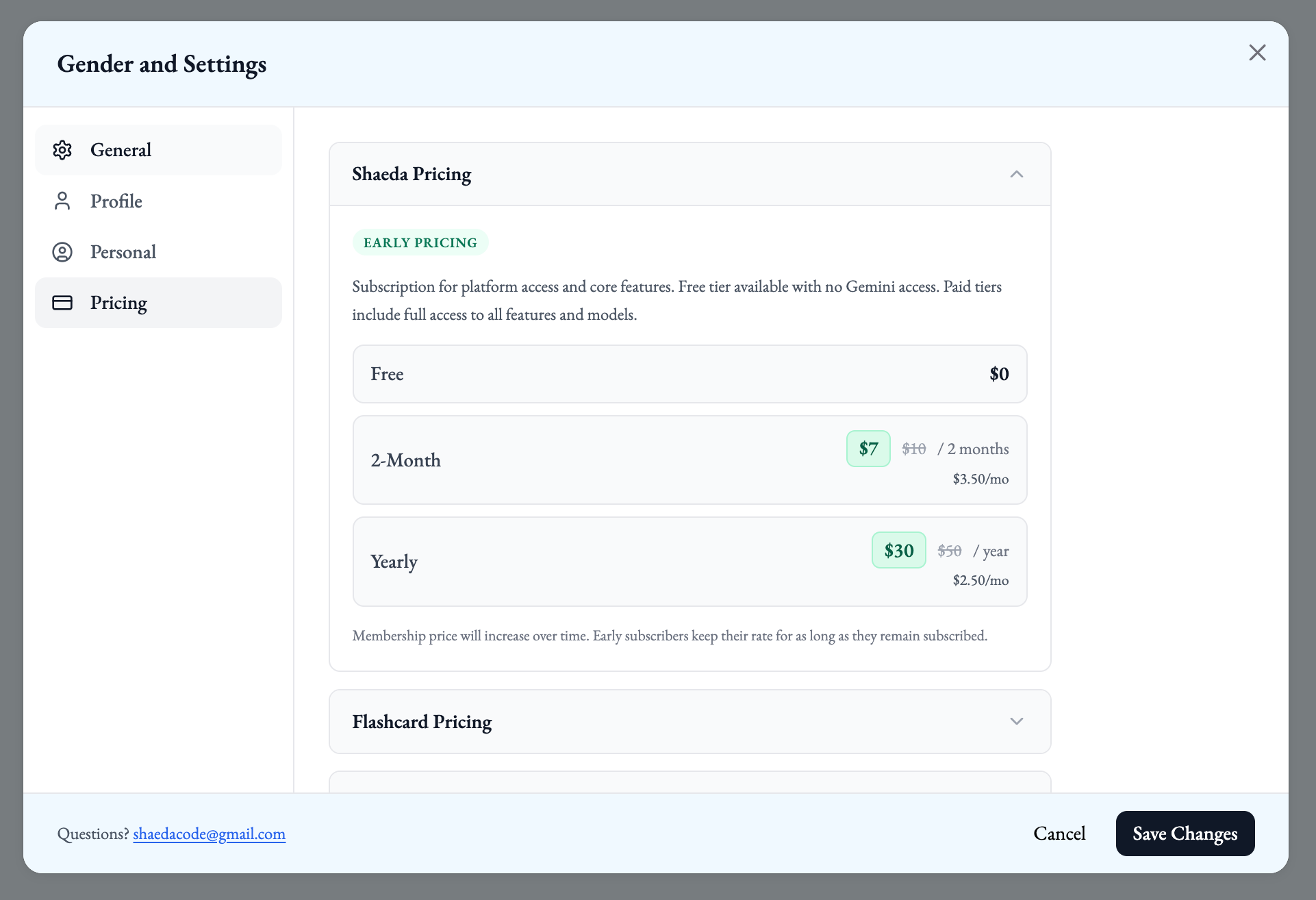
Pricing
For early-access to Shaeda, please email me (shaedacode@gmail.com) or message below.
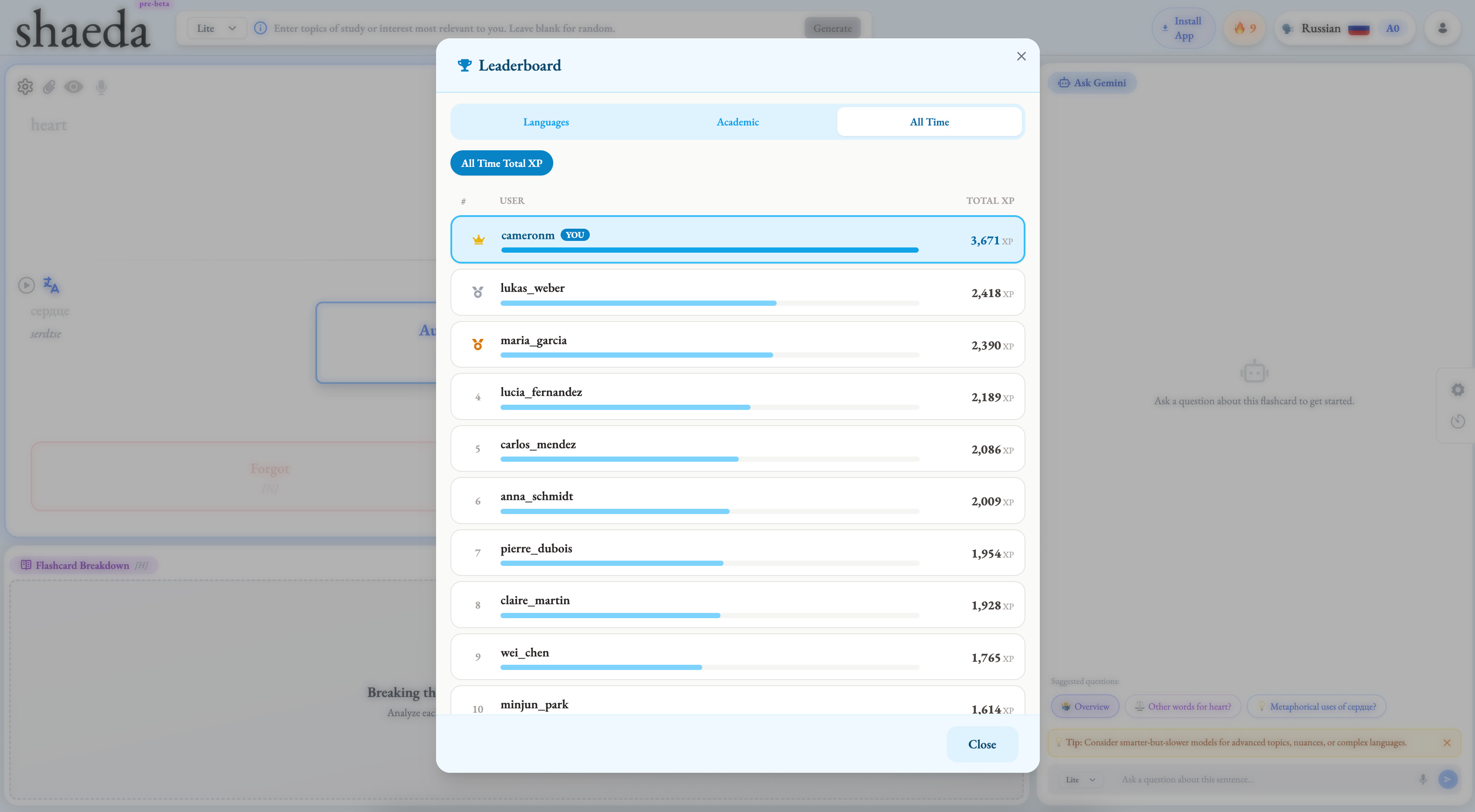
XP & Leaderboards
Whilst I’m generally not a fan of XP for most EdTech apps, after a few requests, I’ve conceded that for flashcards (which can often be perceived as ‘difficult’ or ‘boring’ [which I disagree with]) they are probably a smart addition. One of the (many) issues with, say, Anki for example, is that it’s quite a dull and uninspired experience overall. Having a per-card XP feature and a per-language / per-topic Leaderboard alongside should improve the experience without being overly gamified or dopamine-heavy. Generally, so long as gamification doesn’t disrupt the actual learning process, it is likely fine - the issue is that with most apps, it commonly does.
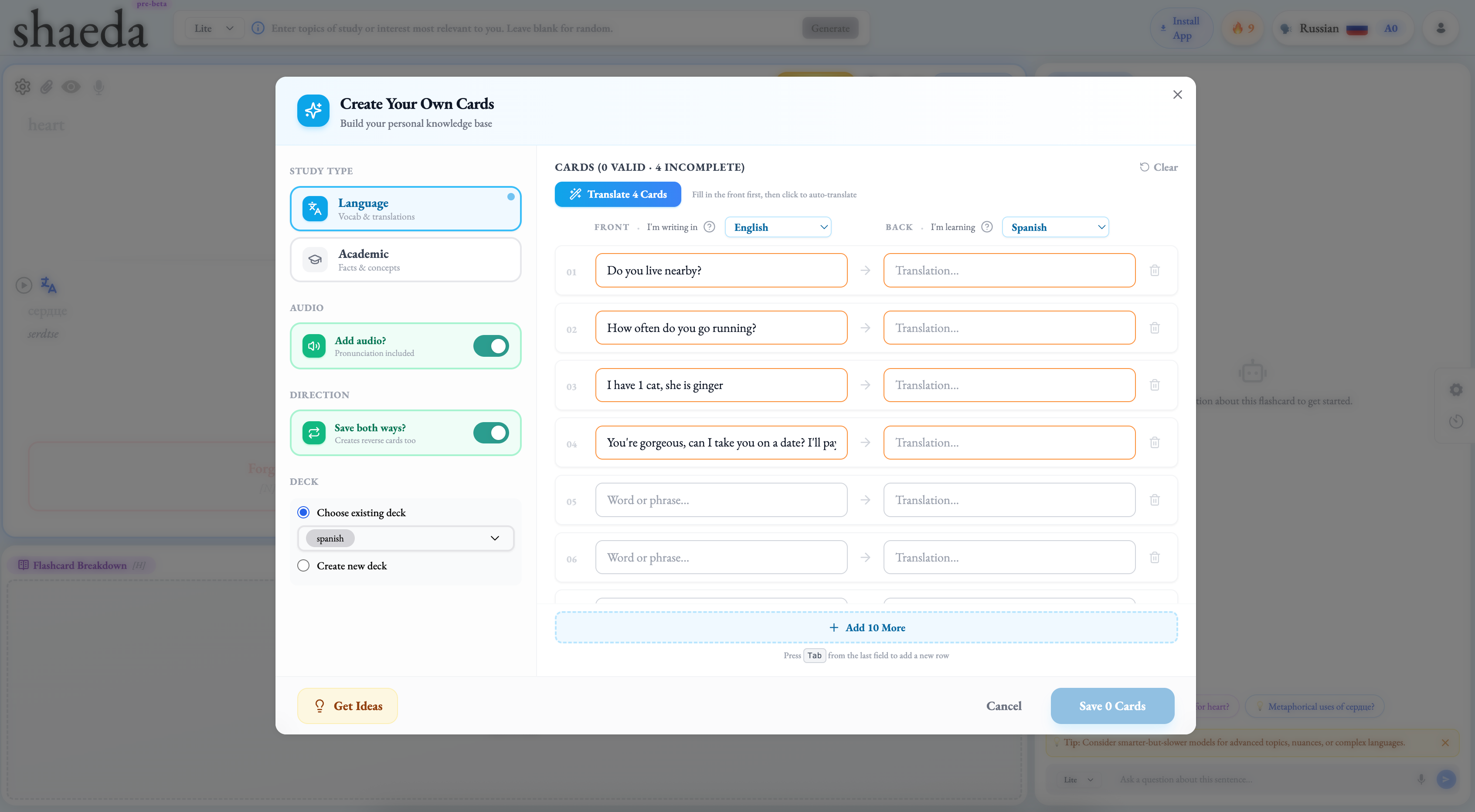
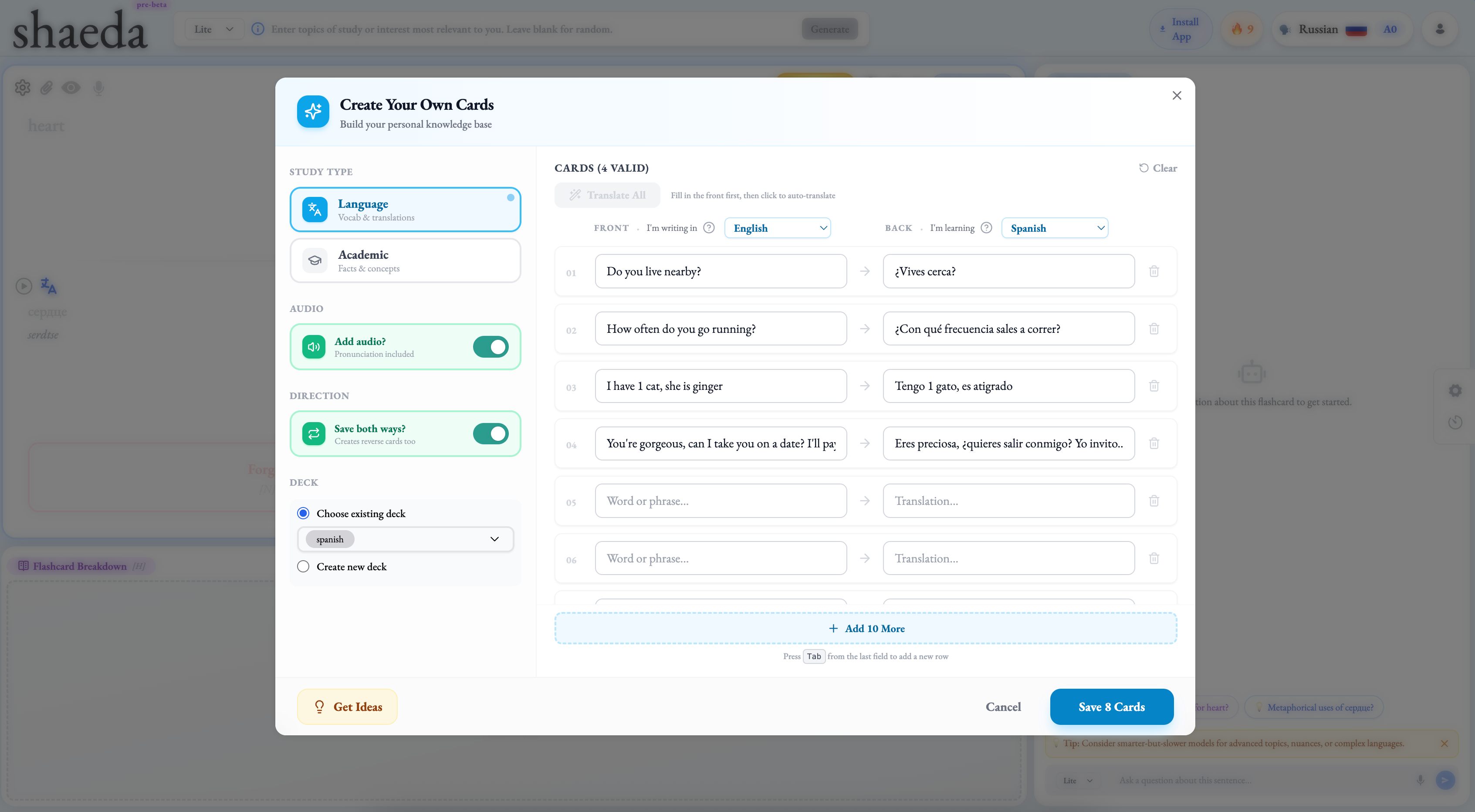
DIY Cards
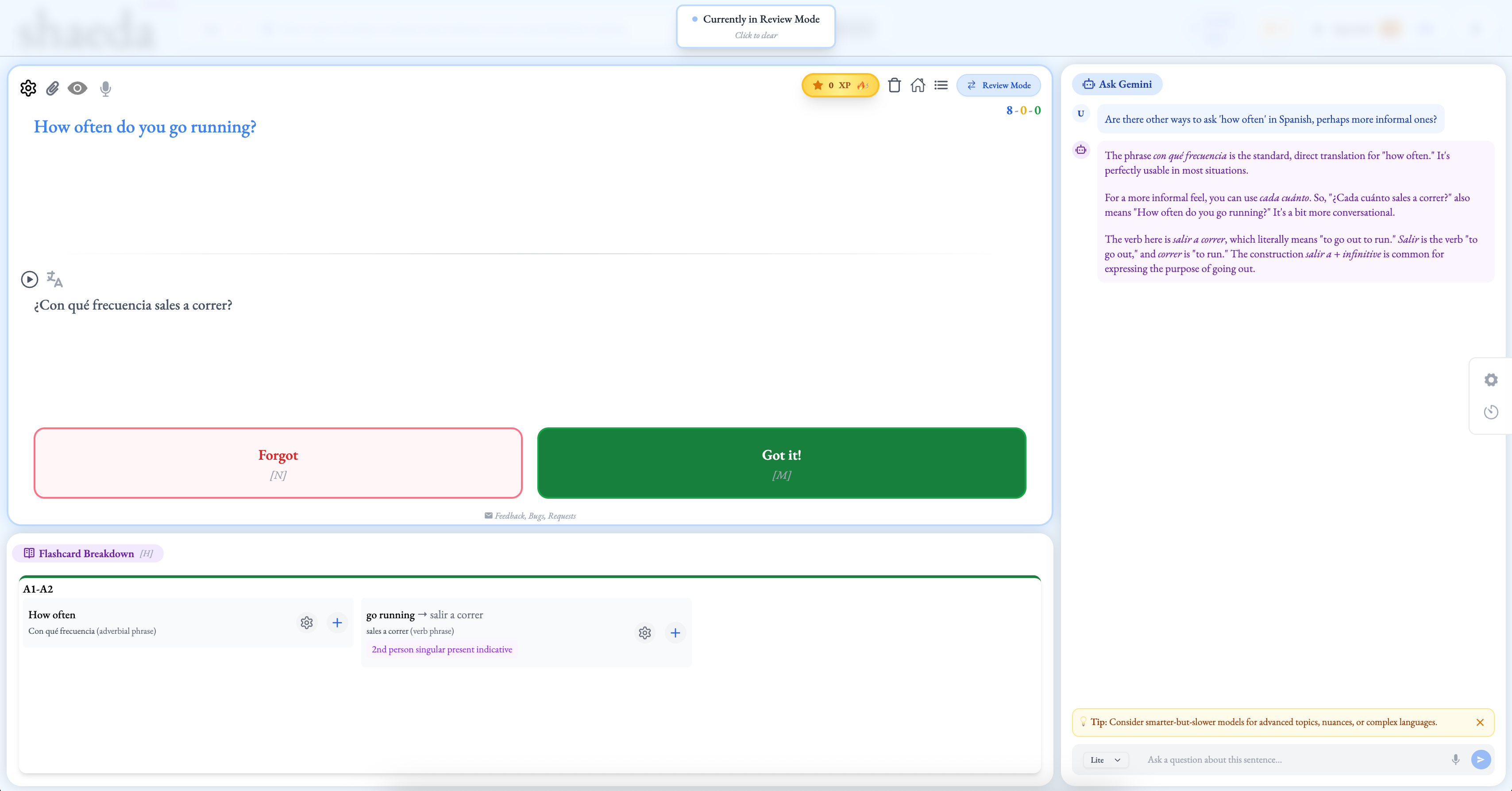
For Academic learners: simply type the front and back.
For Language learners: simply type exactly the words or phrases you wish to practice and have the translation and audio generated at the same time. The reason this is helpful is that the language you’re learning is probably not the language of your keyboard. But now you do not need to go to other sites or apps to generate the word/sentence, you simply type it in your native (keyboard’s) language and the app will convert it into your target language.
I don’t know of any other flashcard app that allows for this feature. Even if possible (such as on Anki) there are many more steps and it can be quite technical involving third-party tools etc. On Shaeda you just type, click Generate and save.
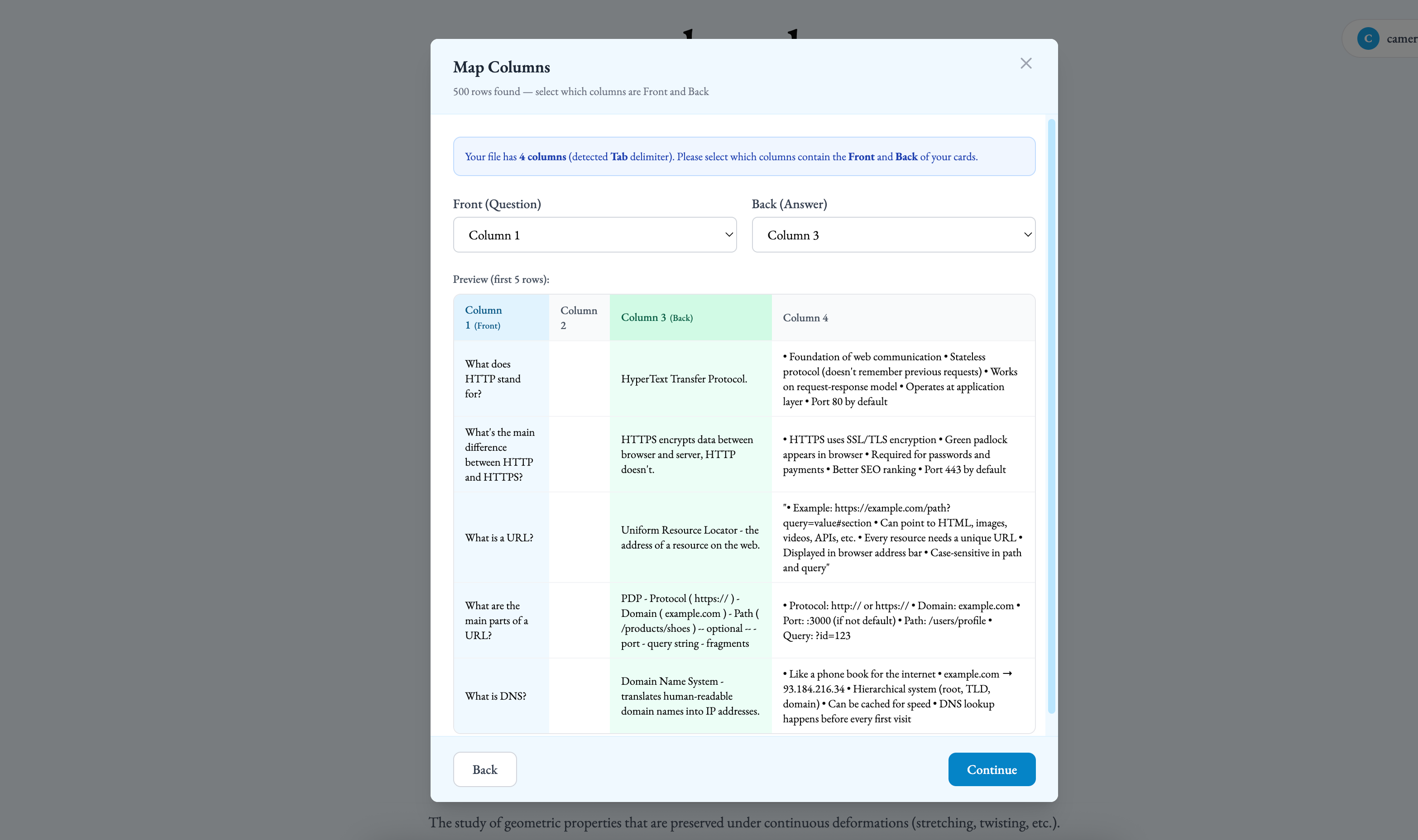
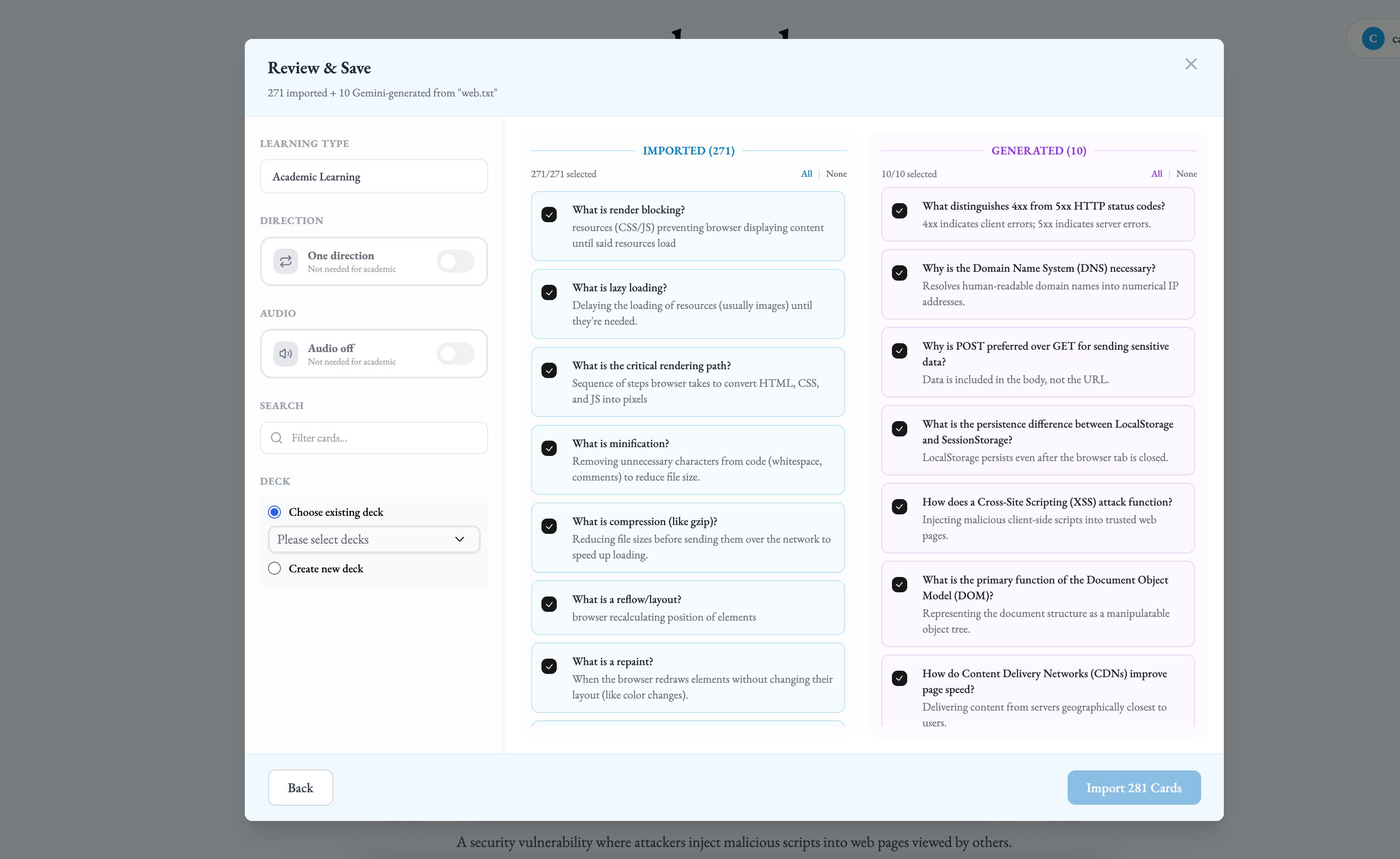
Import Anki (+ generate related)
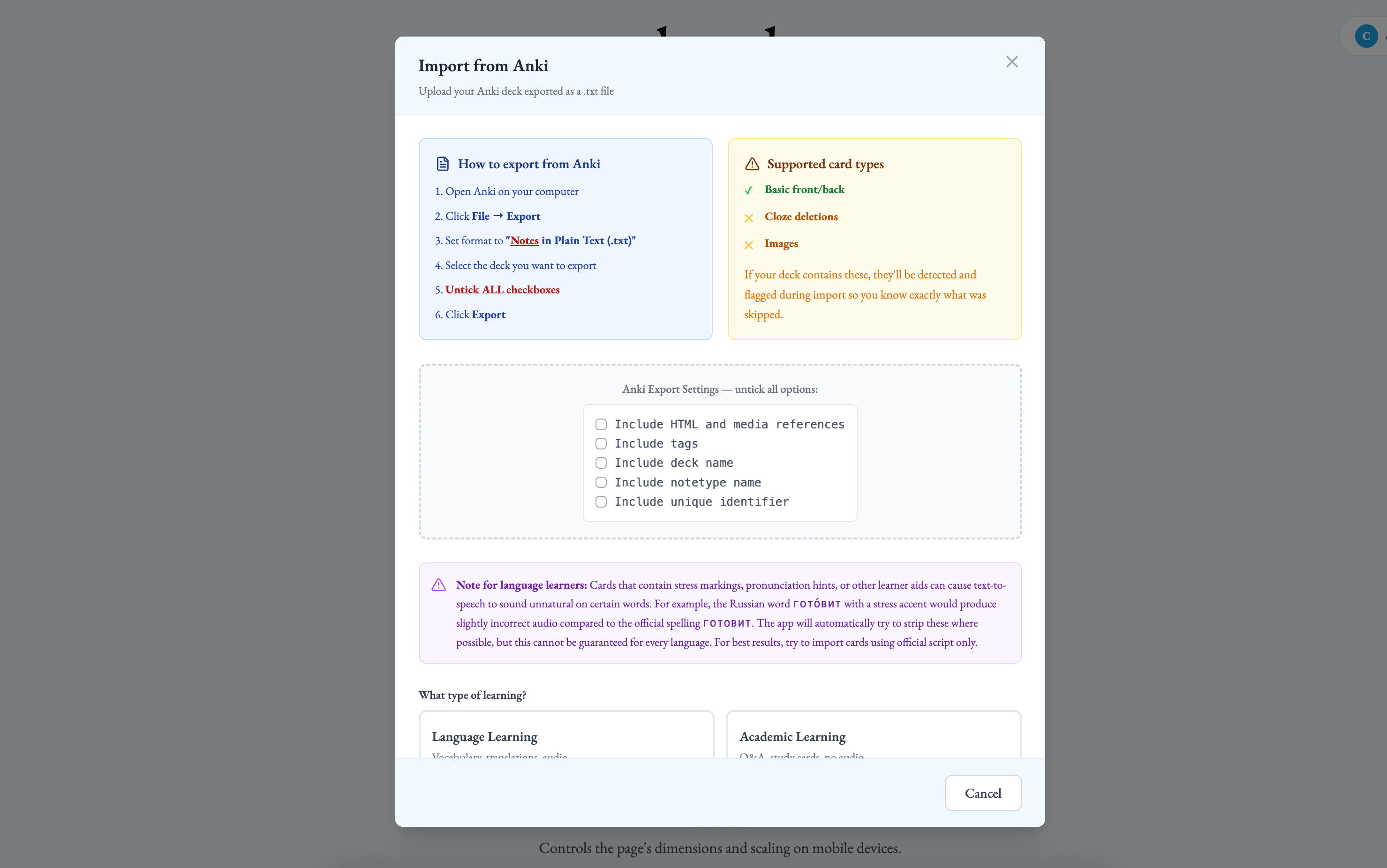
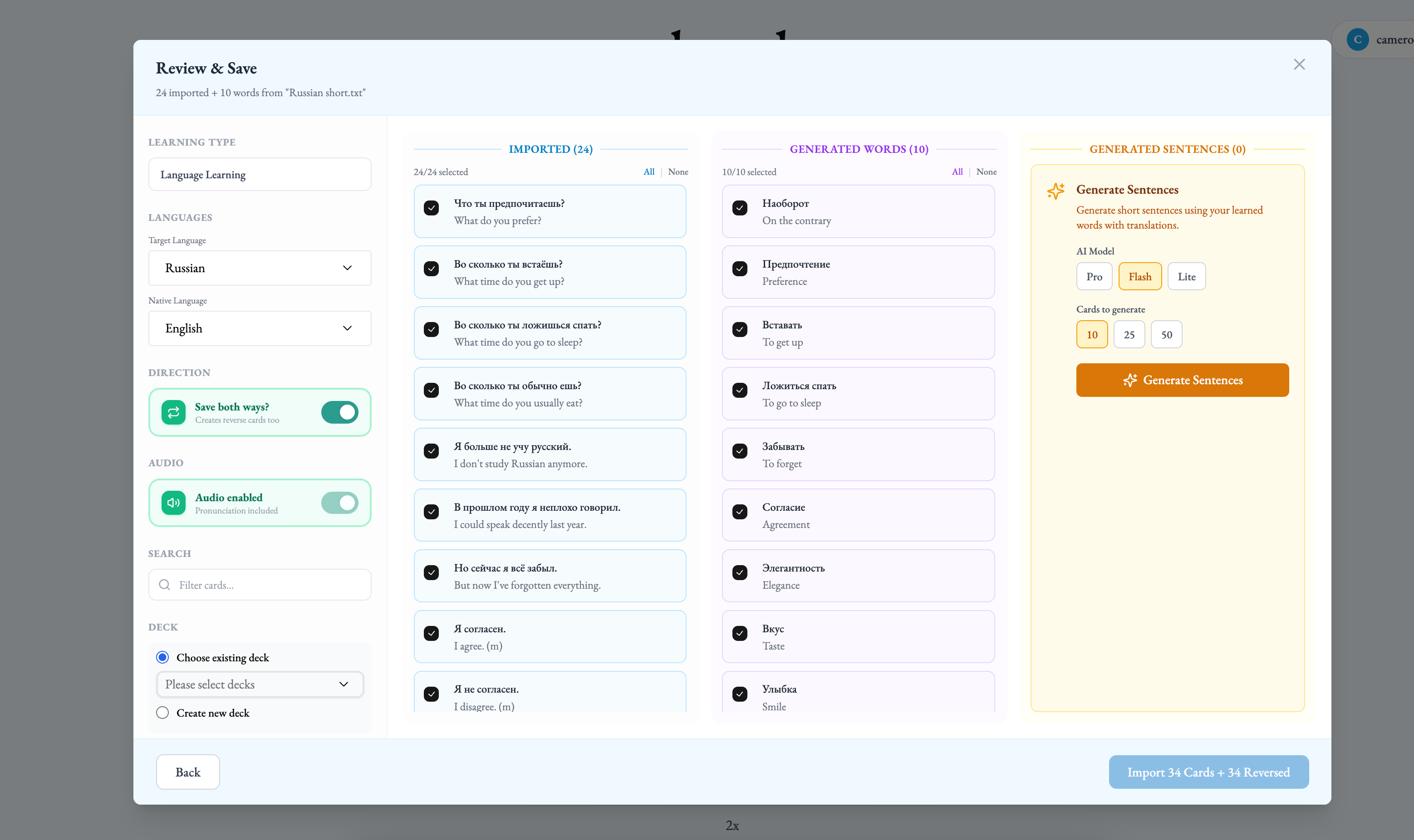
You can now import your Anki deck (with audio, for Language learners) and have the option to ‘Generate Similar’.
For Academic cards imported, this will either generated related questions, pre-requisite questions, or the same questions but just reworded. This last point is notable as failing to correctly answer the same card that’s differently worded can indicate that the user simply recognised the card rather than knew the content.
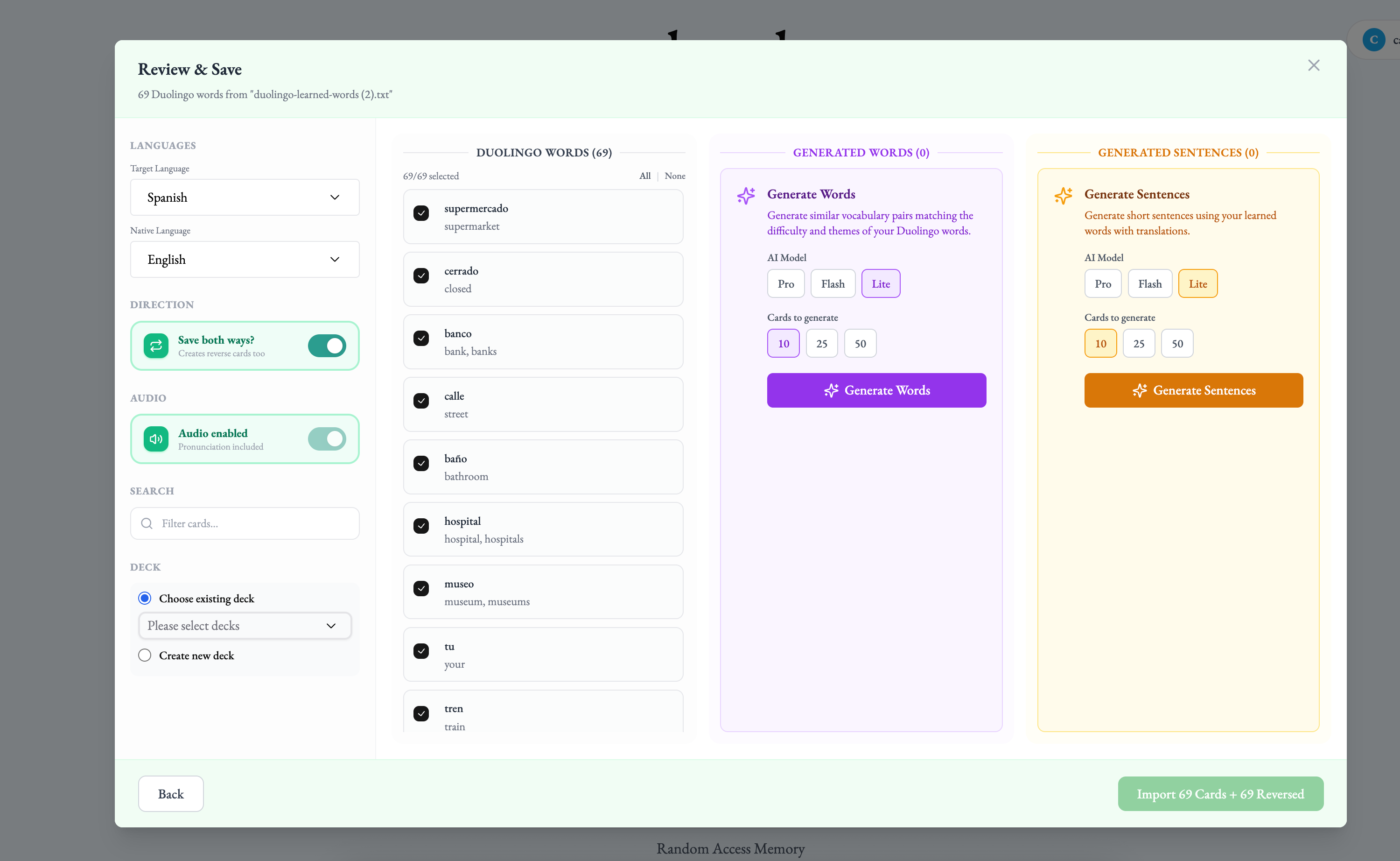
For Language cards imported, you have the option to generate similar words or similar sentences - again, all with Chirp3HD audio.
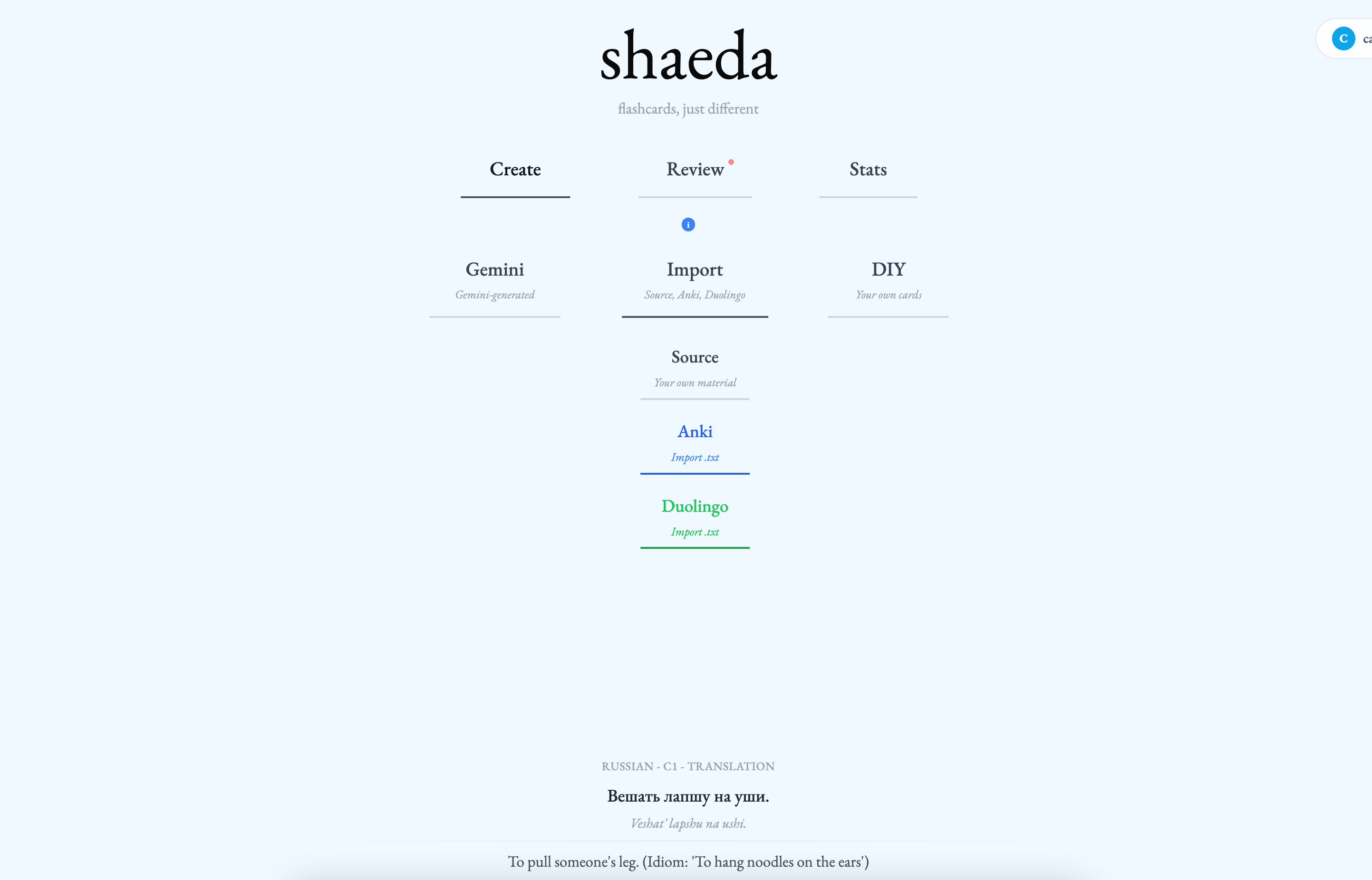
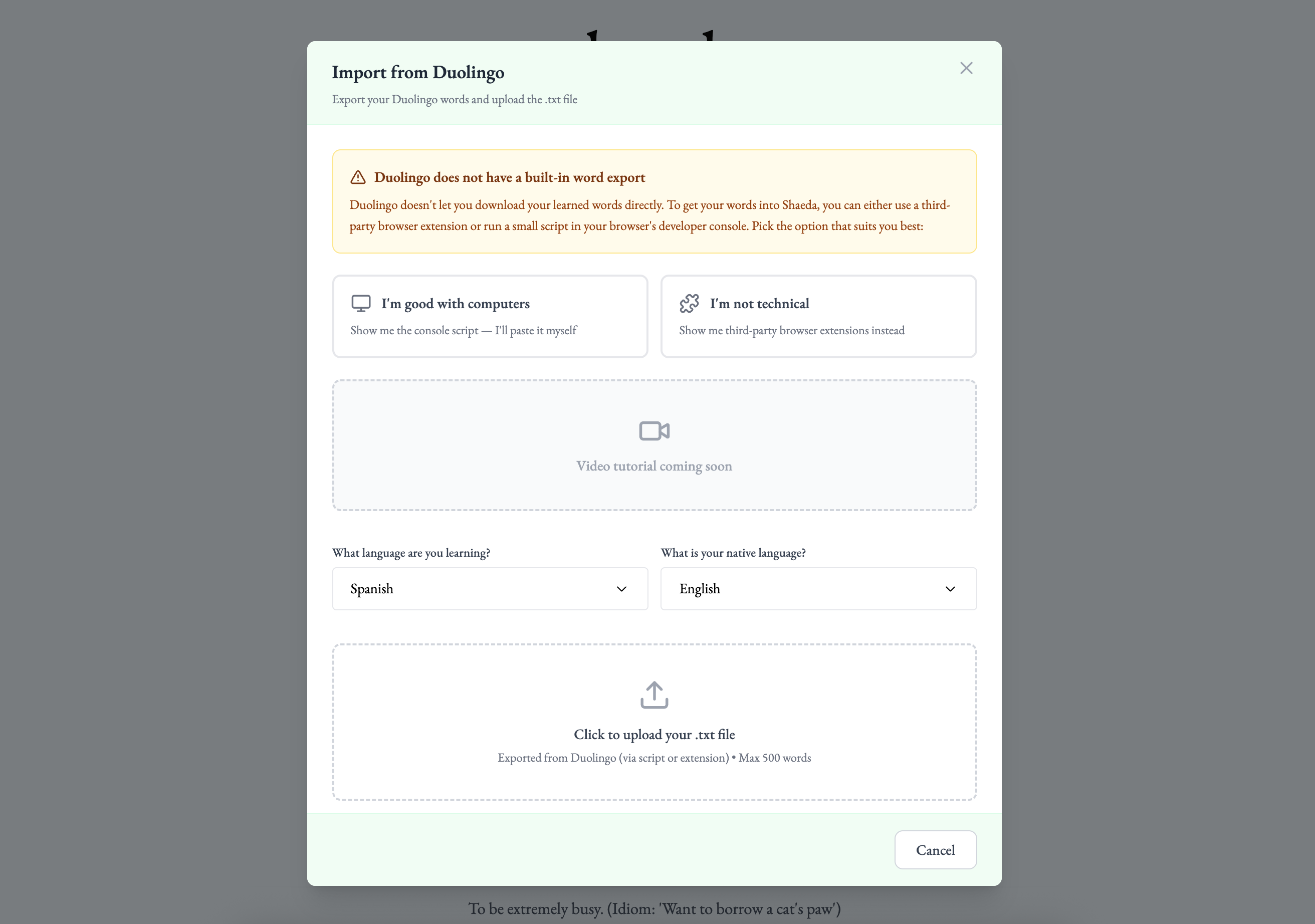
Import Duolingo (+ generated related)
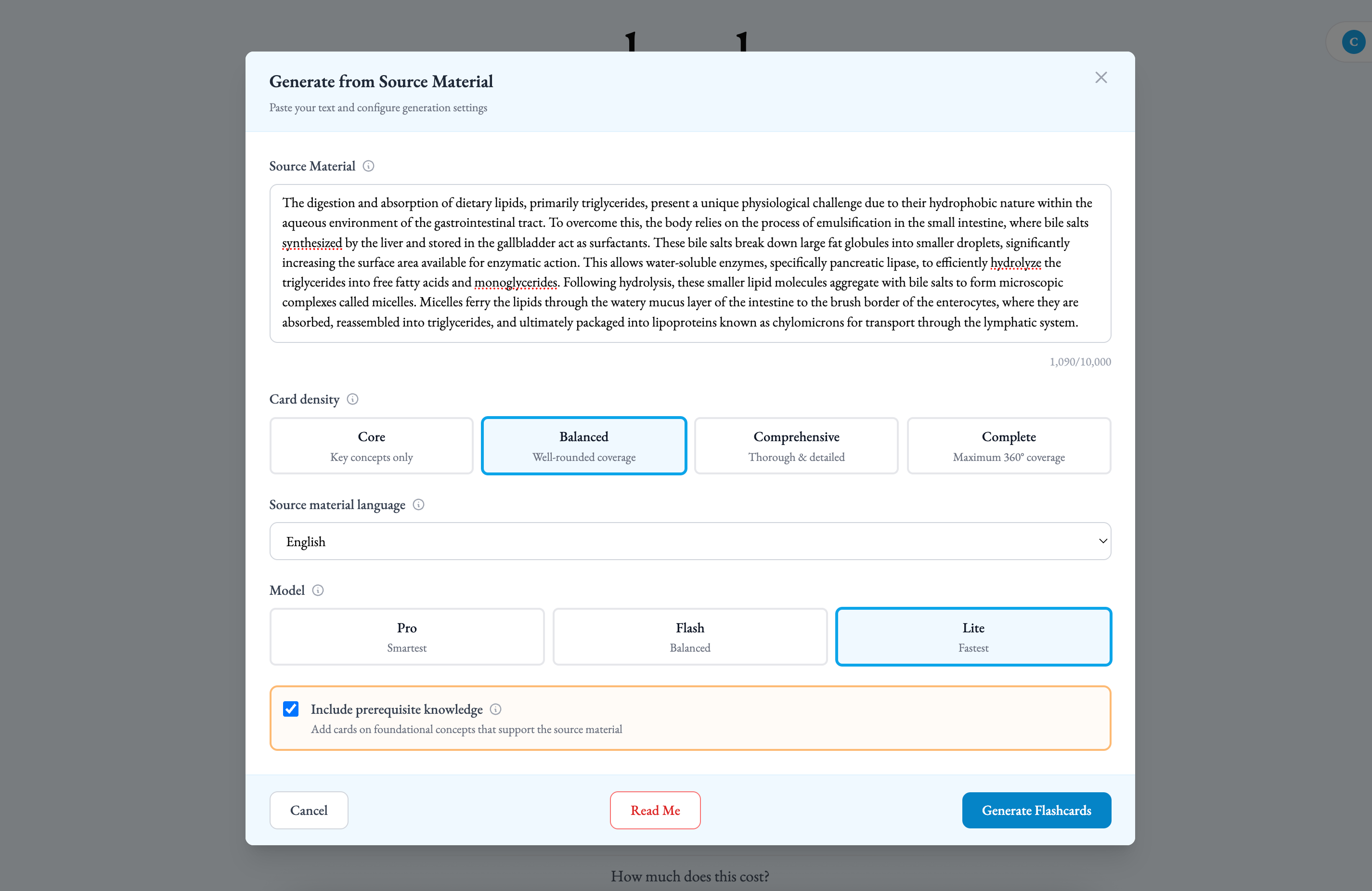
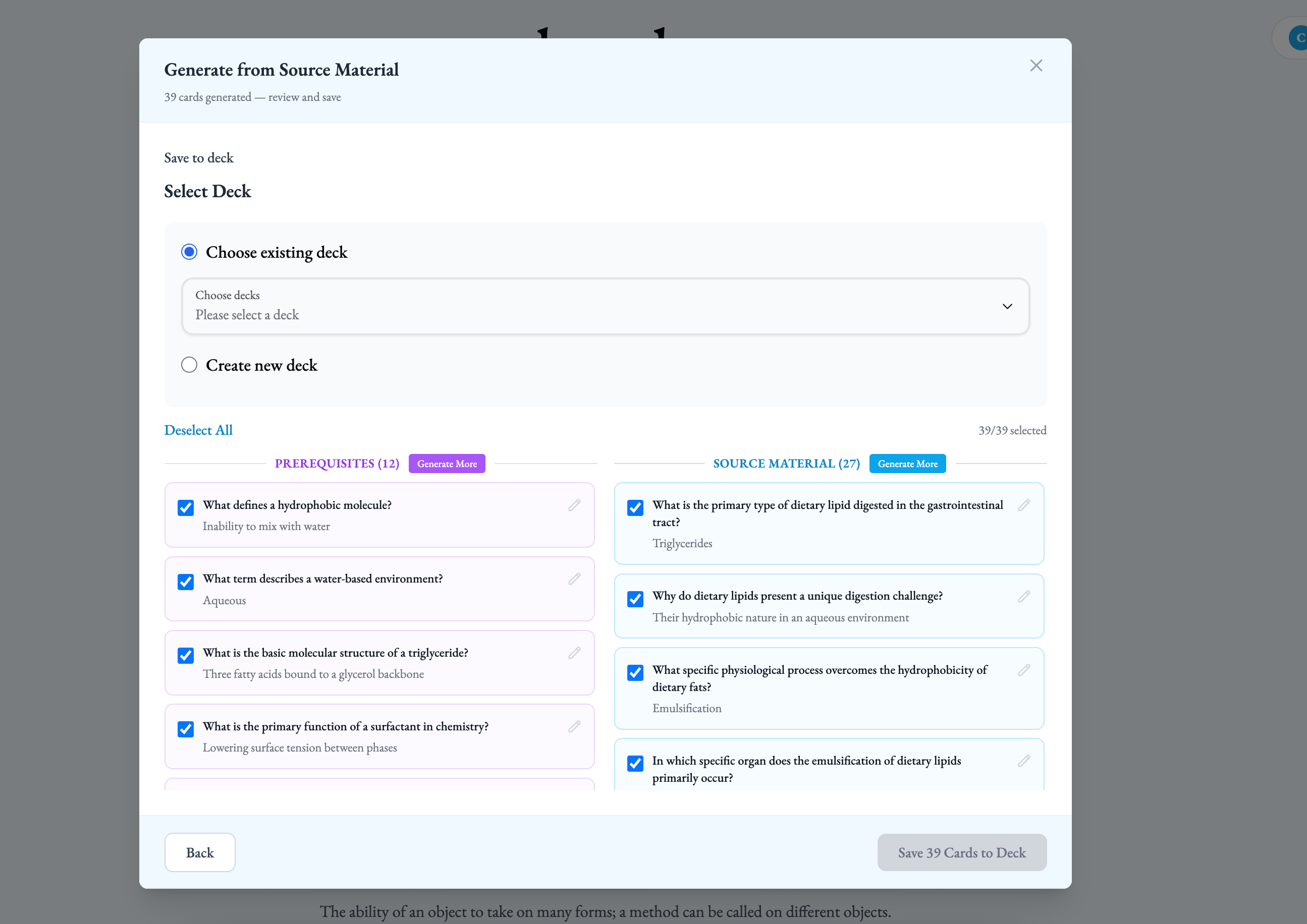
Import Source Material
Note: this is intentionally text-only. LLMs have a much lower accuracy when reading other formats, such as PDFs or screenshots. This is another problem with other flashcard apps in that this is never mentioned to the user. The result is that students are pasting tonnes of complex documents, PDFs and screenshots etc but the AI the app uses has almost certainly misread parts or even missed sections entirely (See here for a non-technical article)
Another issue with other apps is that they always use old and very cheap models, which is why they advertise “unlimited monthly flashcard generations” as though it’s a good thing for effective studying - it is not. Put simply, Anki aside, flashcard apps online are not good. I will show an example at the end of this post.
If you are wanting flashcards generated from a textbook, simply type the text in. Not only is this going to be substantially more accurate, it is also going to actually offer a small benefit anyway with reading and typing the material prior to having the cards generated.
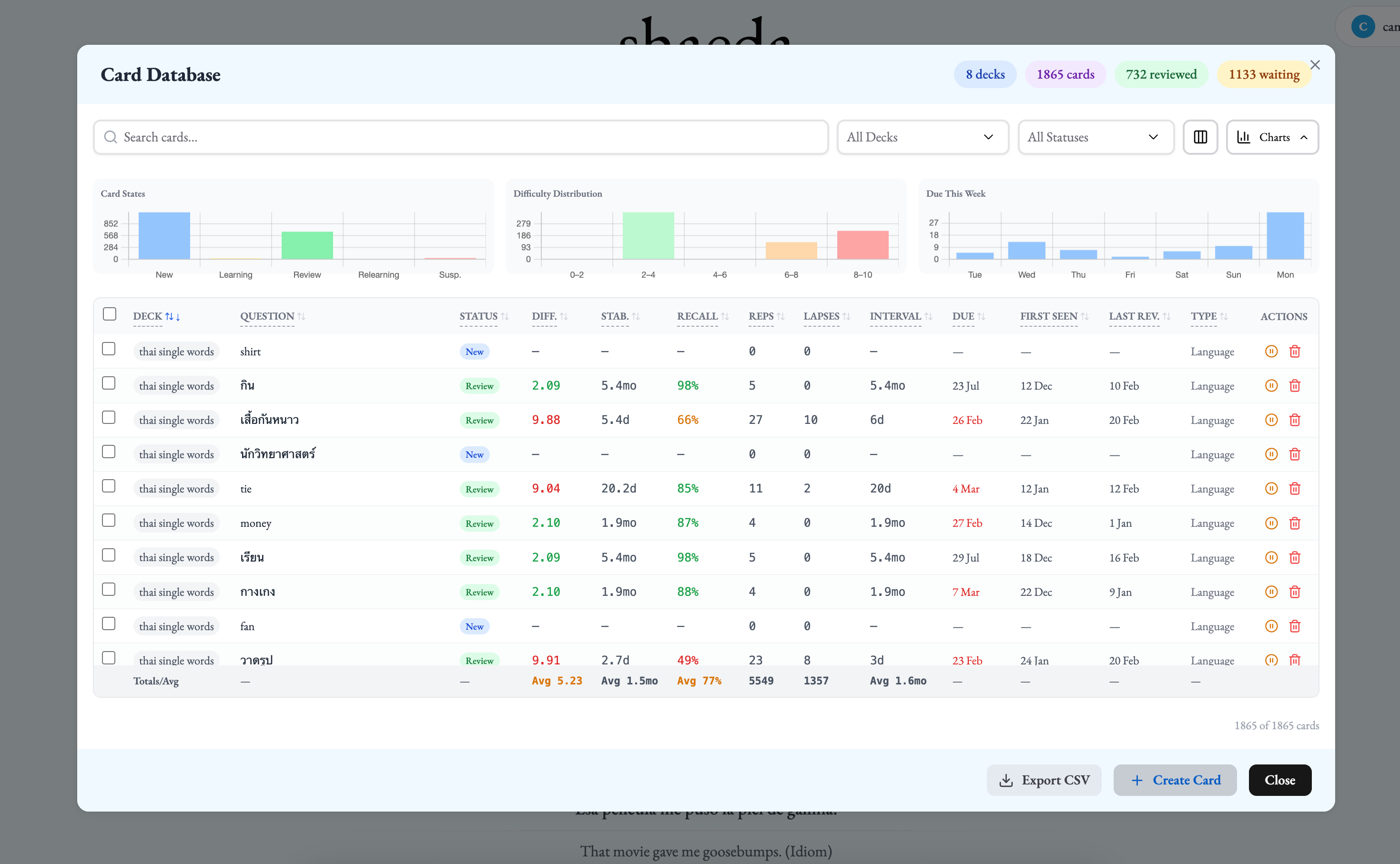
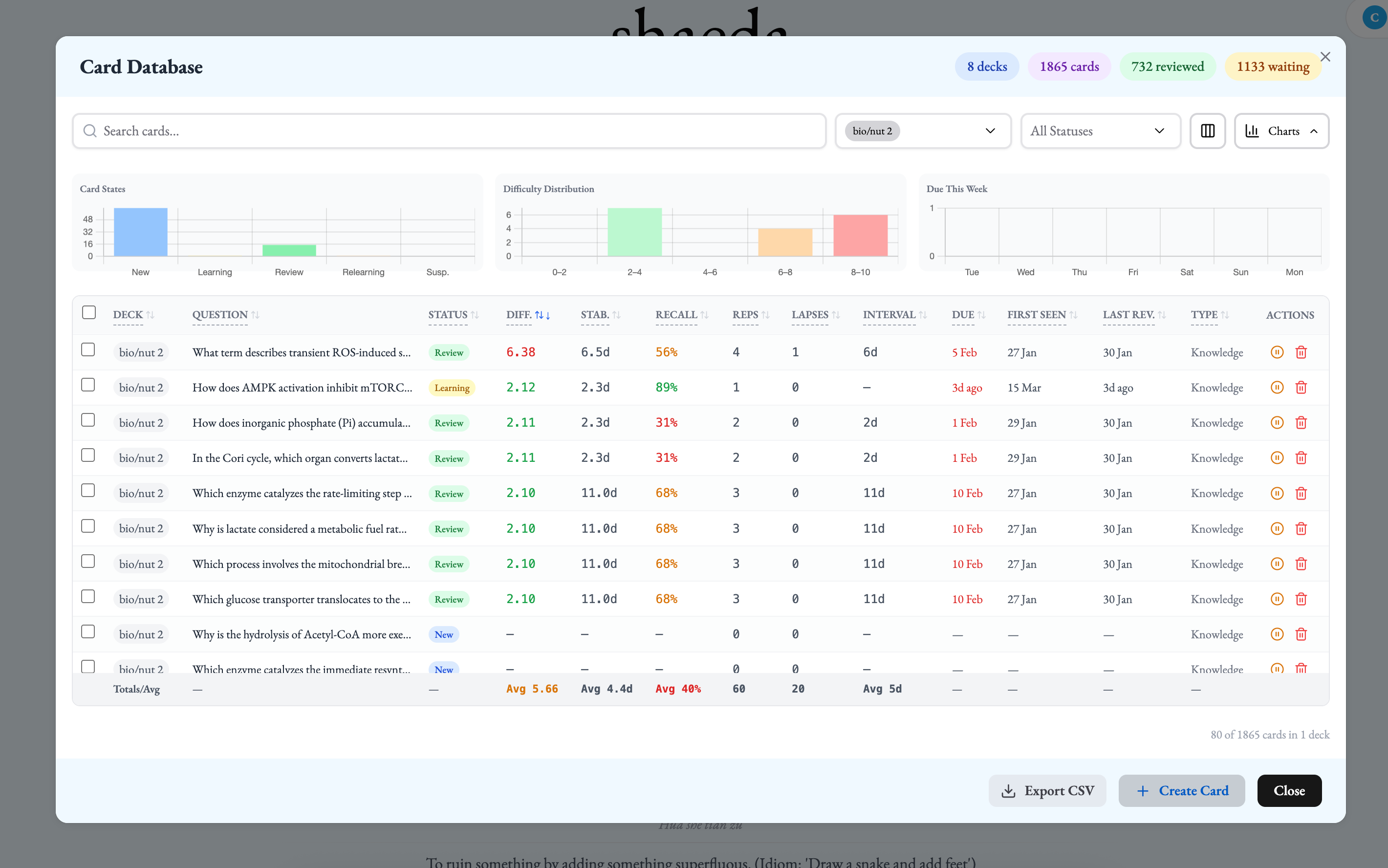
Card Database
Whilst this isn’t quite on Anki’s level for incredibly detailed statistical analyses, it’s substantially better than other flashcard apps and far more intuitive. Many don’t provide such statistics at all yet somehow charge $20p/m.
Deck Statistics

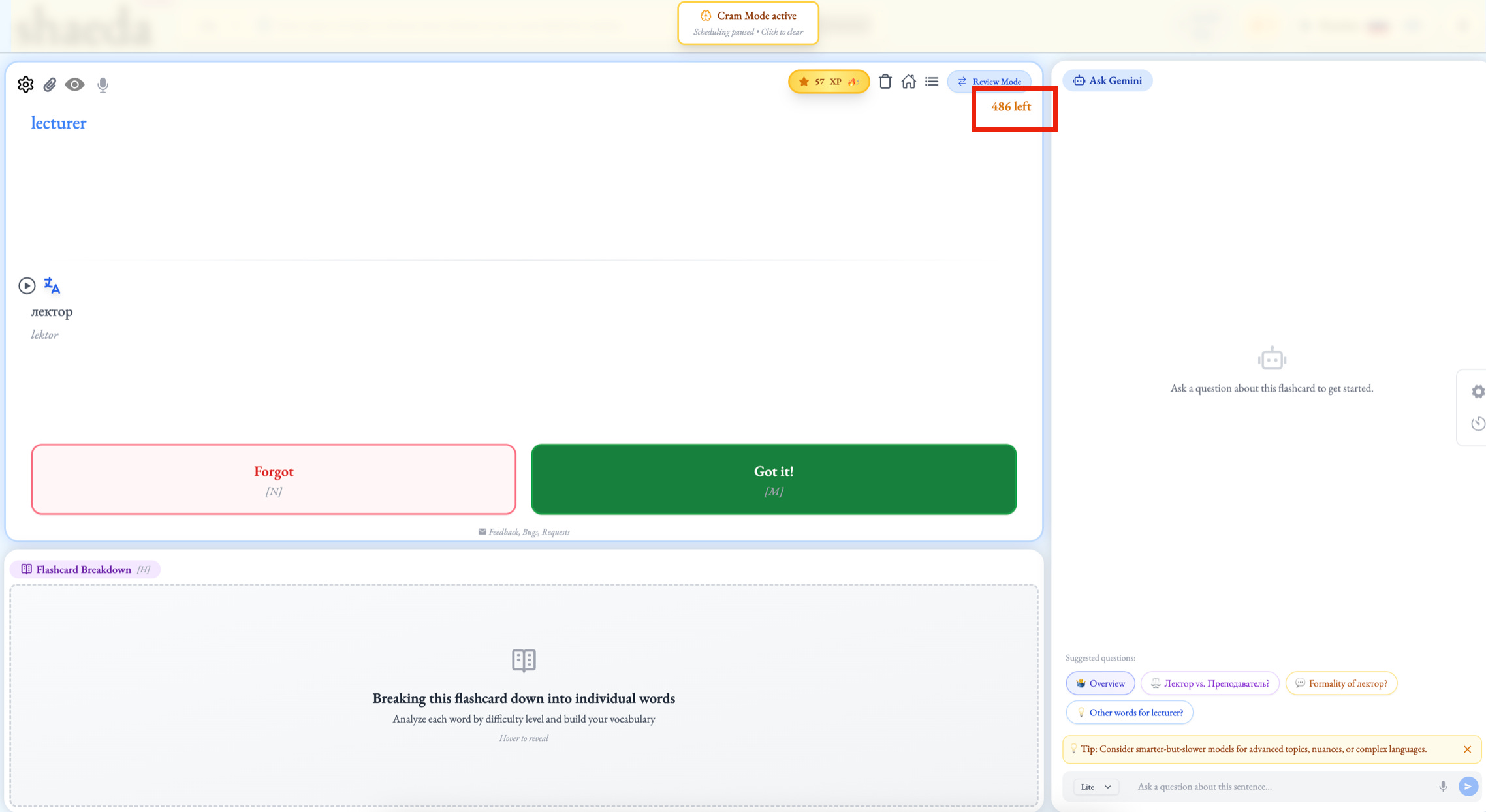
Cram Mode
Cramming can be incredibly beneficial when done correctly. For those studying Academic, this typically means daily cramming a week or so before the exam. This is the one time where it absolutely makes sense to disregard the importance of the “spacing factor” (waiting as long as possible until reviewing) and get in as many reps as possible. Outside of this specific area, the efficiency of cramming is going to be substantially reduced.
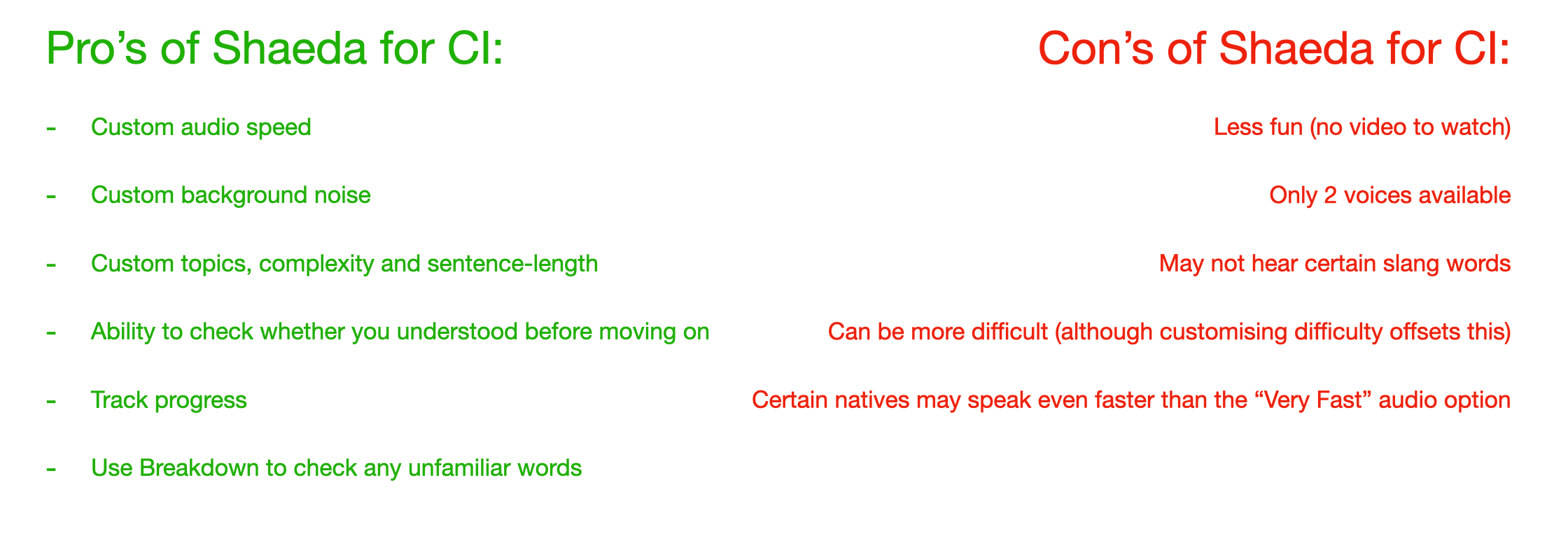
Cramming for Language learning can be done, and is essentially just a way to get level-appropriate and relevant-to-you Comprehensible Input (CI). There are pro’s and con’s to using Shaeda for CI versus consuming native films or videos.
Diagnostic (90% finished)
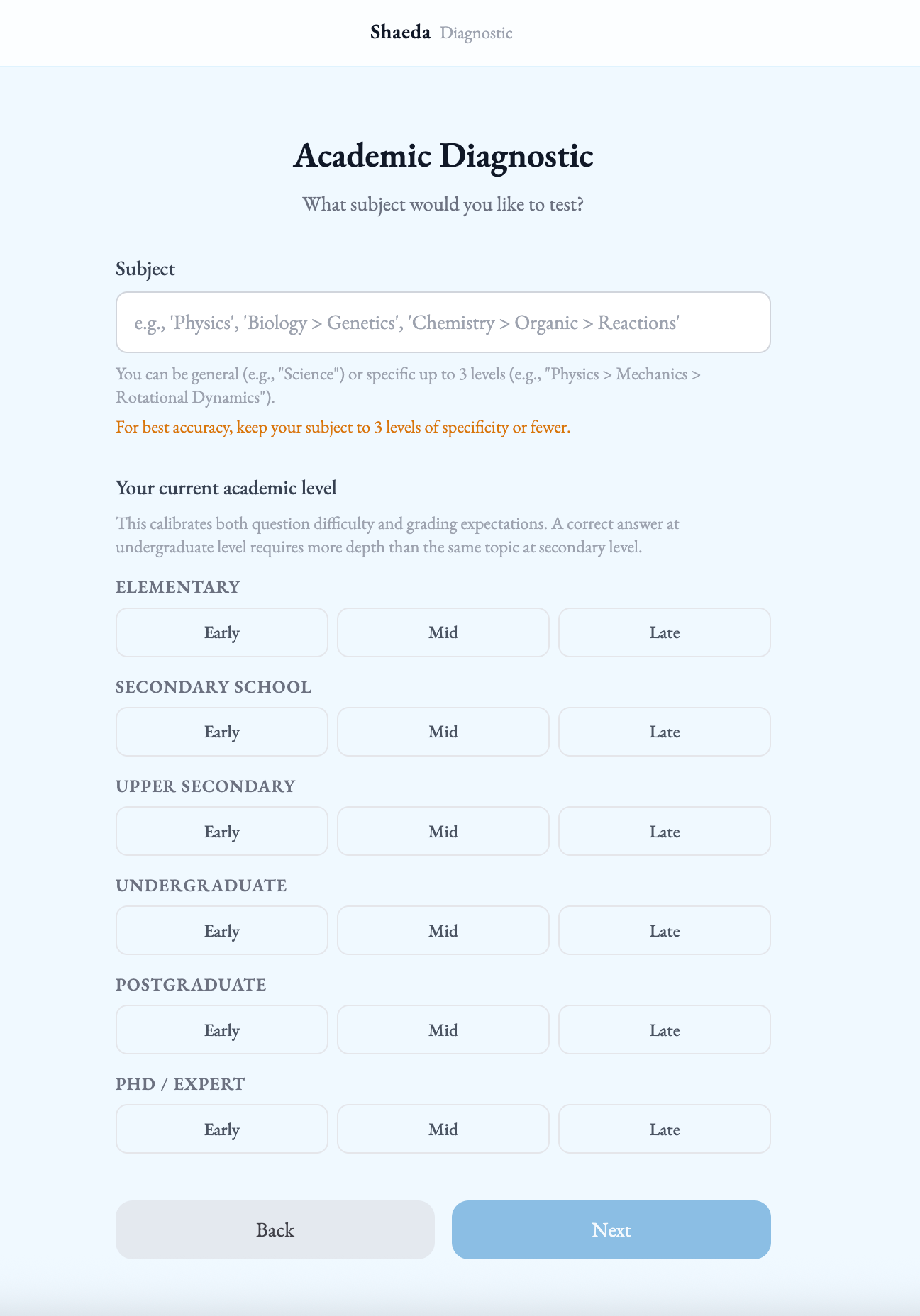
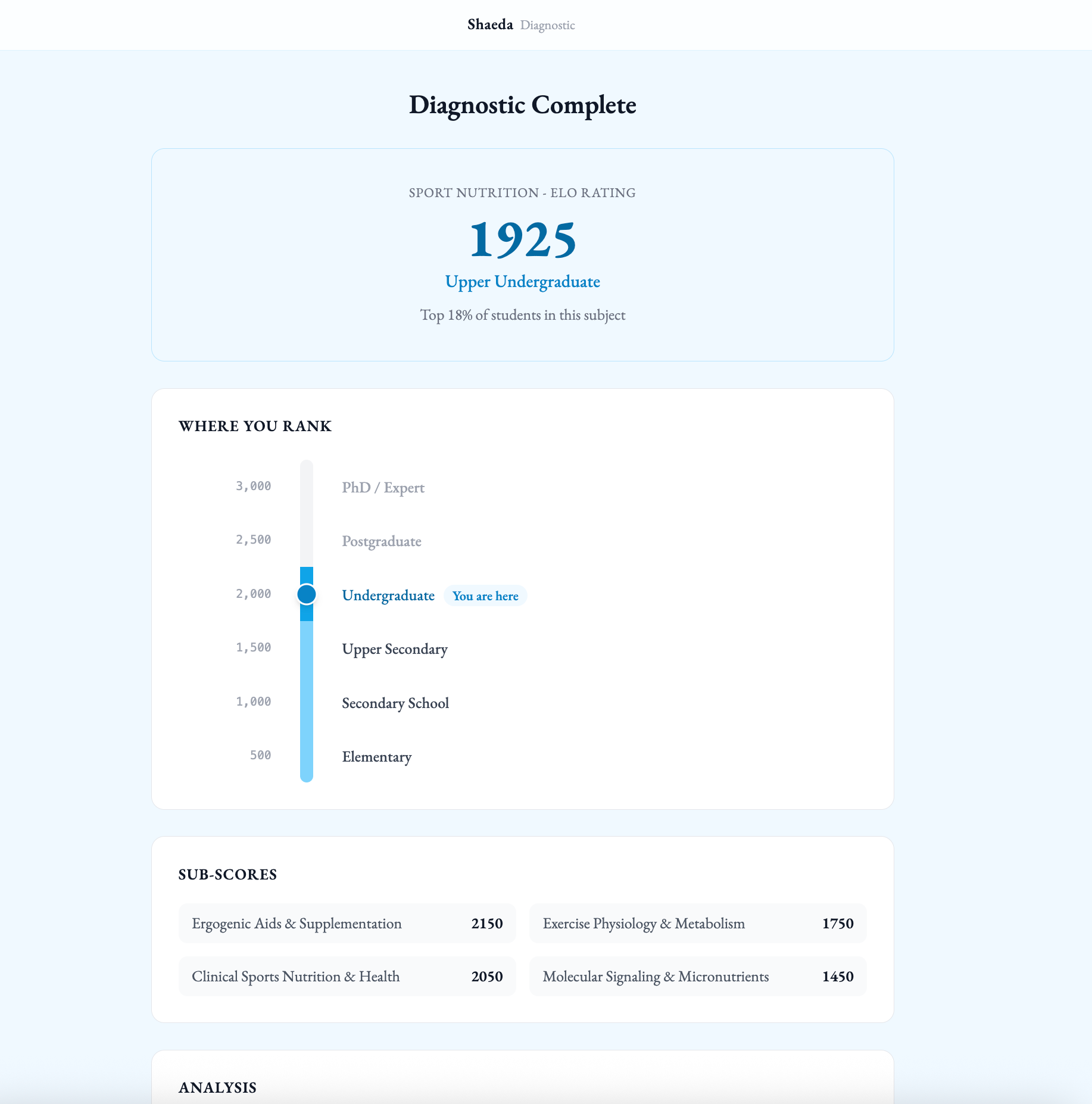
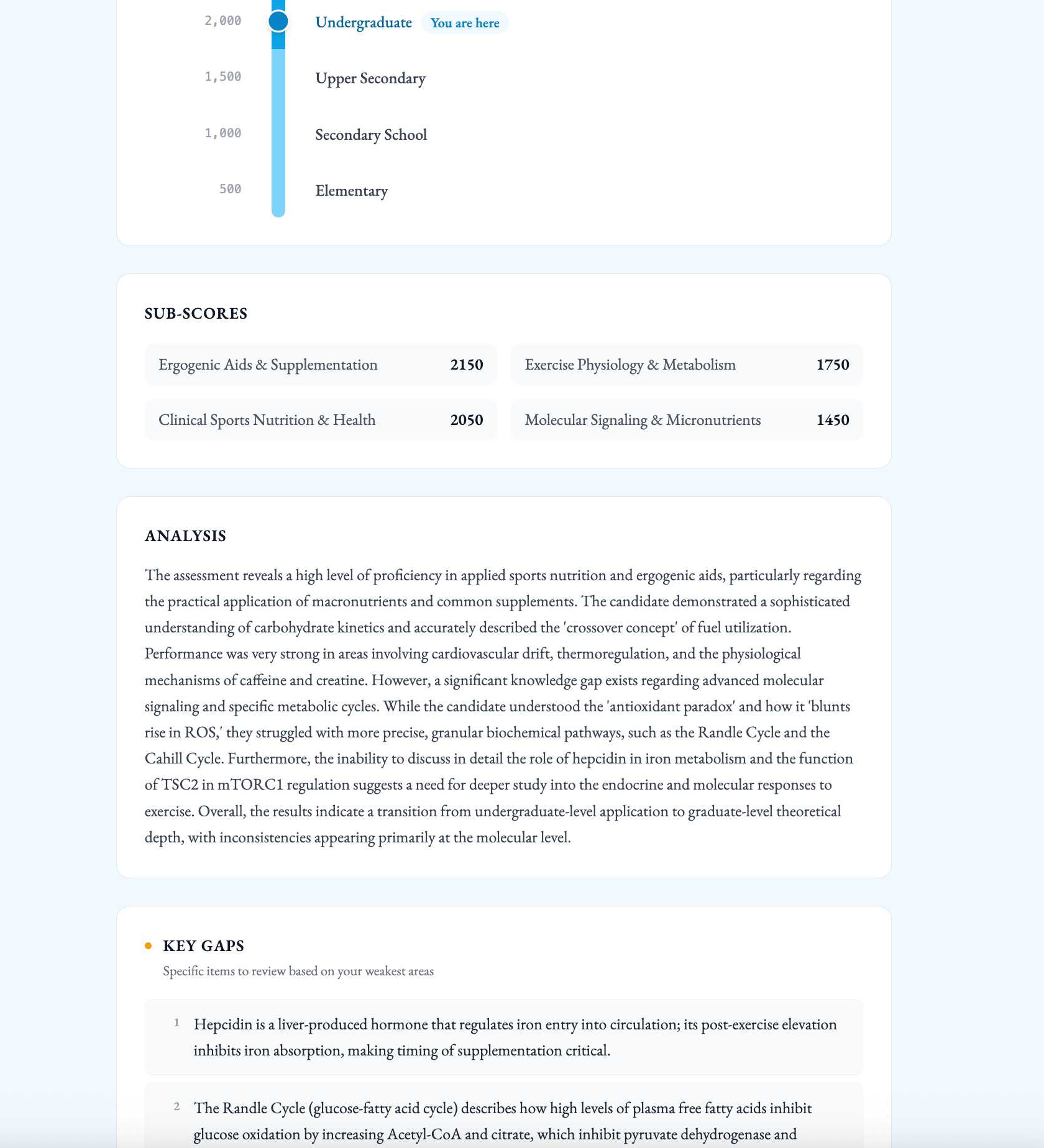
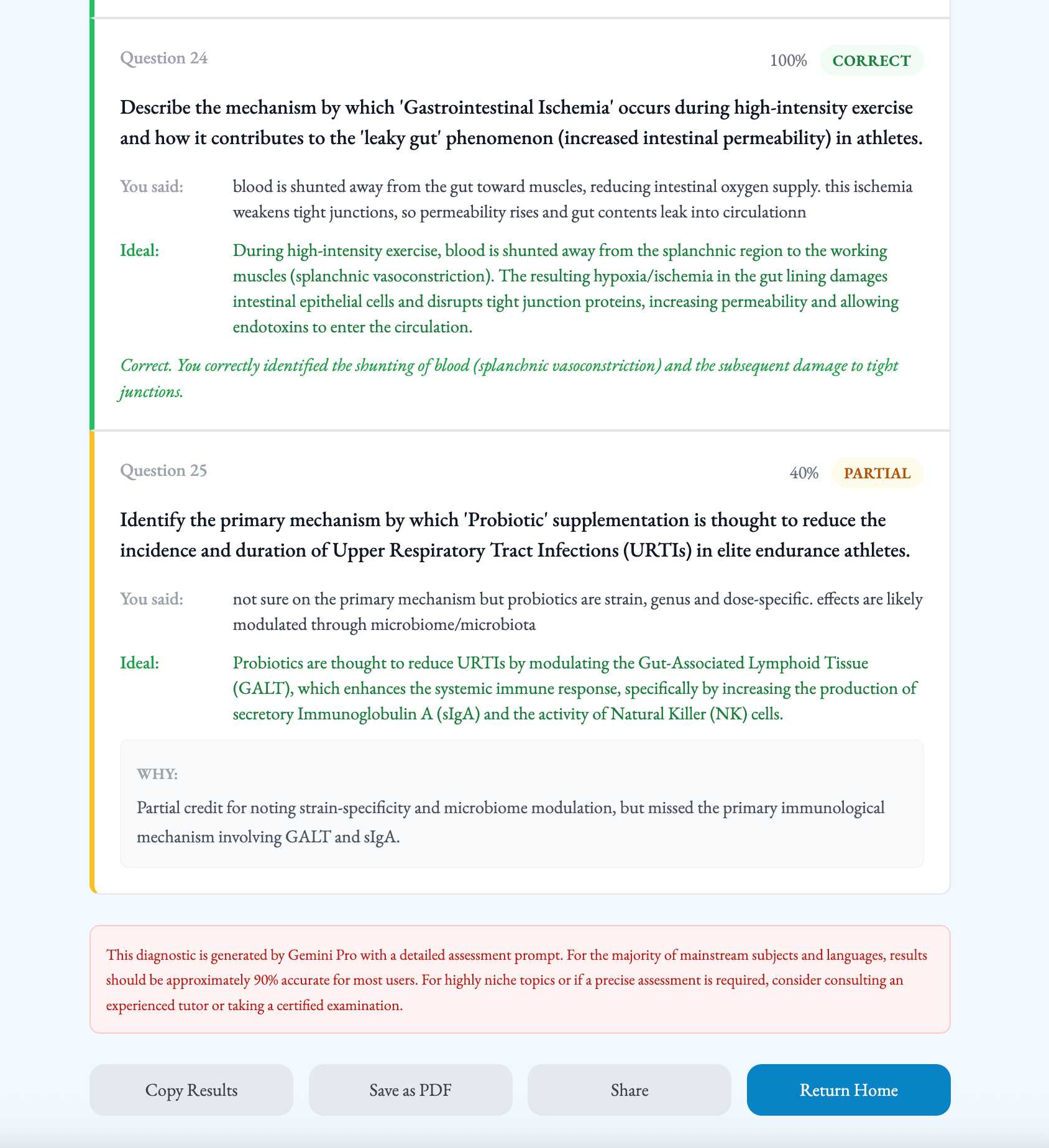
For both Language and/or Academic, you have the option to take a ~20 minute ‘test’ to assess your initial level and repeat every ~2 months to check and assess how your knowledge level is growing. Here is mine for Russian, and Nutrition Science.
Shaeda vs Others
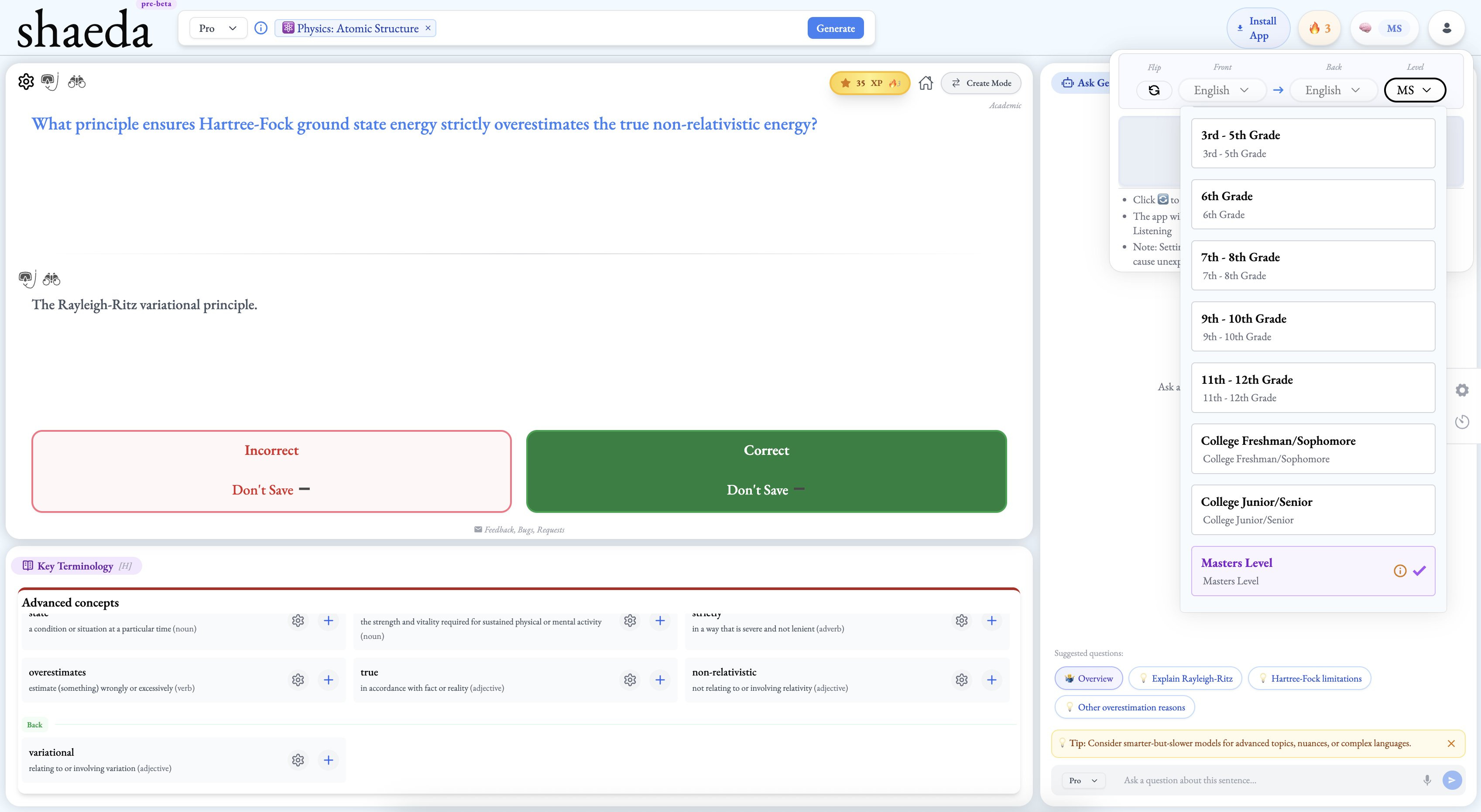
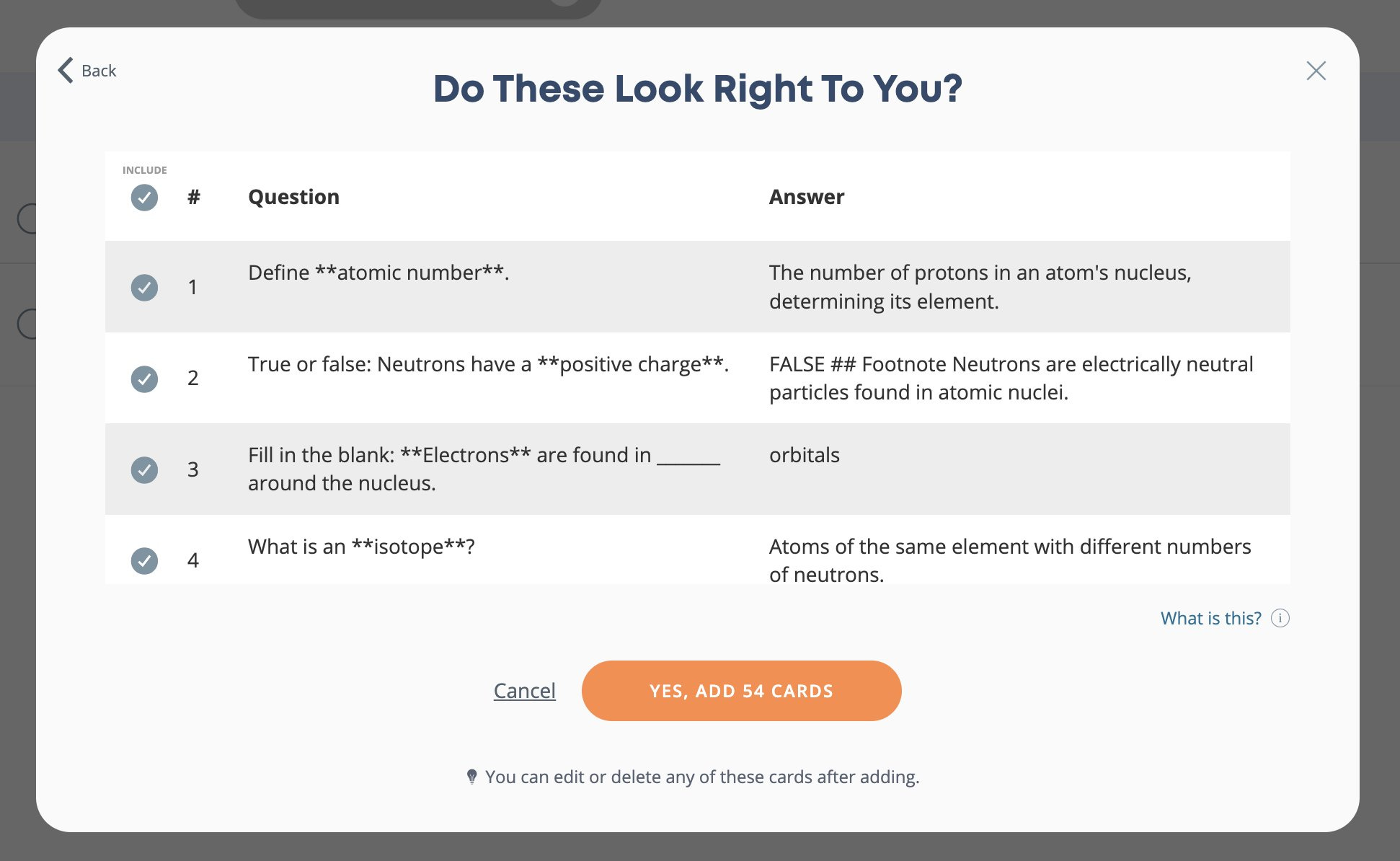
Going back to what I mentioned earlier re other apps not disclosing which LLM they’re using (because they use very old and cheap) and the fact that they advertise “unlimited monthly flashcard generations” (because they use very old and cheap) as though it’s beneficial (it’s definitely not), let’s see below how Shaeda compares ($3p/m + credits) against the current most expensive app app ($20p/m) that’s been around for years and has 10s of millions of users. The screenshots below are the result from having cards generated using the exact same prompt: “Graduate-level atomic physics”
Pricing
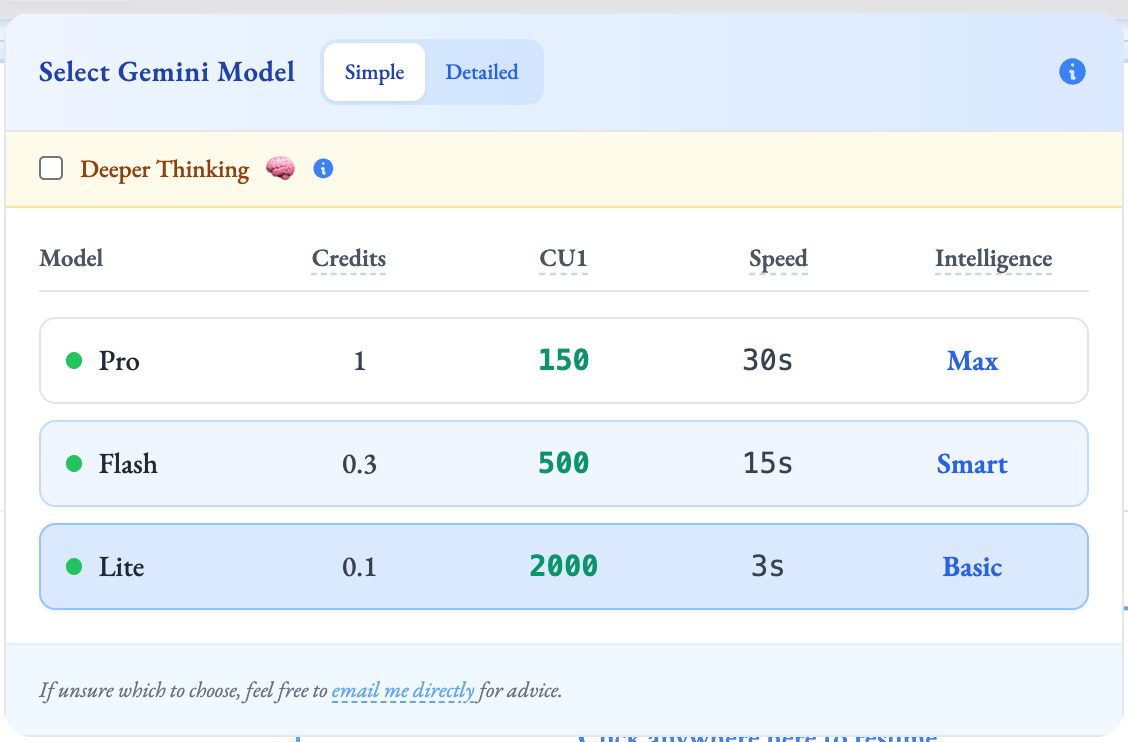
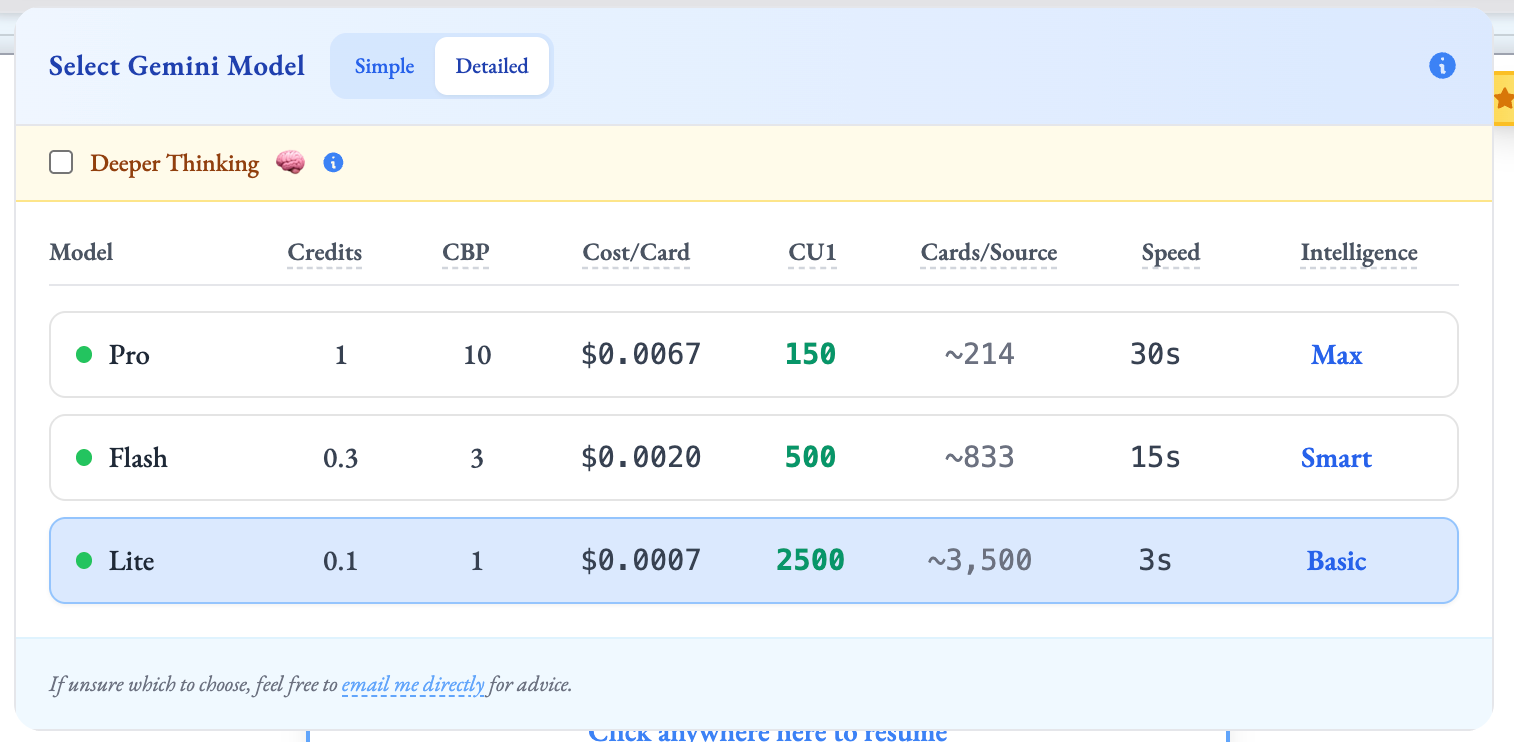
Shaeda will be $3.50 p/m membership + credits on release. This is the most sensible pricing structure and also the fairest. The reason other apps utilise a much higher monthly price with “unlimited” cards is solely to maximise as much profit as possible with no regard for actual usage or value. Users have no choice because there are no alternatives (currently). With Shaeda, you get maximum value and transparency. Flashcard apps (Anki aside) have been borderline mocking users for a very long time. Hopefully Shaeda can put an incredibly small dent in that by providing a far more productive and effective experience for 2-5x less.
The reason it is the fairest is that, for some, $1 in credit costs could last an entire year or more. For these users, paying a high monthly fee (>$10p/m) is illogical. For others, perhaps studying MS-level Academic, it is of no use having the allure of “unlimited” flashcards when they actually need fewer but more detailed, technical and accurate cards. For these students, paying a higher monthly fee is illogical.
The fix is simple: a substantially lower membership fee plus (less-profitable) credits.
That’s everything for this update. If you know of anyone who may be interested in learning much more efficiently (and cheaper), feel free to consider sharing this update with them!
PS: Please consider leaving a like or sharing. 50% of users who have signed up for Shaeda have all posts go to their spam - this isn’t ideal. Sharing or liking, Substack say, will help emails be directed to inboxes instead. Thank you!